Semrush vs Moz Pro: Which SEO Tool Is Better in 2026?
This guide compares Semrush vs Moz Pro across 6 key SEO areas. Semrush excels as an all-in-one suite for enterprise growth and PPC tracking, while Moz Pro offers a streamlined, budget-friendly dashboard focused strictly on organic search fundamentals and Domain Authority.

By Ellie / Updated on June 26, 2026


Choosing between Semrush and Moz Pro can feel like a high-stakes gamble. Both platforms demand a significant chunk of your marketing budget, and choosing the wrong one can waste thousands of dollars on an interface your team dislikes or data you don't trust.
While both tools crawl the web to give you essential SEO metrics, they serve fundamentally different workflows:
- Semrush is an aggressive, all-in-one digital warfare suite. Beyond traditional SEO, it monitors paid ads (PPC), social media, content lifecycles, and modern AI search footprint, built for agencies and hyper-growth marketers.
- Moz Pro is a streamlined, educational organic search dashboard. It focuses tightly on SEO fundamentals and clean reporting metrics like Domain Authority (DA), designed to strip away complexity for in-house teams and boutique agencies.
To cut through the marketing fluff, this guide strips away the hype and compares Semrush vs Moz Pro across 6 key comparison areas.
1. Domain Analysis & Competitor Intelligence
Let's examine how each platform breaks down competitor visibility, evaluates domain strength, and provides actionable market insights.
Shared Core Metrics (Available in Both)
Both platforms provide a standard "Domain Overview" that includes essential SEO data:
- Authority Score: A quick indicator of how well a site is likely to perform in search results.
- Backlinks: The total number of external links pointing to the website.
- Keyword Data: The total number of keywords a site ranks for, along with its top-ranking keywords.
- Anchor Text: The most common text used in links pointing to the website.
- Competing Domains: A list of the site's main search competitors.
Semrush's Unique Advantages (Overall Winner)
The text concludes that Semrush is the overall winner for domain analysis because it offers a more holistic view, featuring several metrics that Moz lacks:
- Traffic Estimates: Semrush estimates a competitor's monthly organic traffic. Moz only allows you to view traffic by connecting your own Google Analytics account, making it useless for competitor traffic analysis. (Note: Semrush's estimates are best used for identifying trends rather than relying on them as exact figures).
- Search Intent Data: Semrush shows why users click on a domain's results (e.g., to research, buy, or find a specific page) right in the overview. Moz only offers this in its separate keyword tool.
- AI Visibility Data: A newer feature that shows how often a domain or brand is referenced in AI-generated search results.
- Advertising Data: Semrush includes data on paid keywords and paid ranking positions, which Moz does not provide.
Moz's Unique Features
While Semrush is more comprehensive, Moz offers two specific, handy metrics that Semrush does not have:
- Brand Authority: A score that measures how well-known the brand behind the website is (based on US, UK, Canada, and Australia data). This is increasingly important for modern Google rankings.
- Domain Search Theme: A quick, few-word summary of what a website is primarily "about" (e.g., categorizing a site as focusing on "digital marketing tools").
Feature Comparison Summary
| Feature / Metric | Semrush | Moz |
| Basic SEO Metrics | Yes | Yes |
| Competitor Traffic Estimates | Yes (Best for identifying trends) | No (Requires Google Analytics) |
| Search Intent | Yes (Directly in overview) | No (Only in keyword tool) |
| AI Search Visibility | Yes | No |
| Paid Advertising Data | Yes | No |
| Brand Authority Score | No | Yes |
| Domain Search Theme | No | Yes |
2. Keyword Research & Opportunity Discovery
Below, we break down how both systems uncover traffic-driving search phrases and score topical competitiveness.
Shared Core Capabilities
Both platforms handle the fundamentals of keyword research effectively. By entering a query into Semrush's Keyword Overview or Moz's Explore by Keyword, both tools provide:
- Search Volume: Monthly searches for a given keyword.
- Keyword Difficulty (KD): A score out of 100 indicating how hard it is to rank (higher = harder).
- Current Rankings: The domains currently ranking in the top spots.
- Search Intent Filtering: Both allow you to filter keywords by intent (Informational, Commercial, Navigational, Transactional) to focus on revenue-generating phrases.
- List Building: Both offer tools ('Keyword Strategy Builder' in Semrush, Keyword List in Moz) to save, track, and export keyword sets.
Key Differences and Unique Metrics
While both tools cover the basics, they approach keyword prioritization and data volume very differently.
Keyword Suggestions Limits
- Semrush: Highly generous limits scaling with your plan, ranging from 10,000 to 50,000 suggestions per query.
- Moz: Strictly capped at 1,000 suggestions per query across all plans.
Prioritization Metrics
- Moz's Minimum DA: Shows the Domain Authority of the weakest site currently ranking in the top 10. If your site's DA is higher, you have a solid chance of ranking.
- Semrush's Referring Domains: Estimates the exact number of backlinks you need to rank for a target phrase. This is highly actionable for planning link-building campaigns. Semrush also includes a trend graph to visualize a keyword's popularity over time.
Semrush's Unique Selling Points (USPs)
Semrush pulls ahead with several advanced features that Moz lacks entirely:
- Personalized Keyword Difficulty: Uses AI to calculate how hard it will be for your specific site to rank, factoring in your current topical authority and site strength.
- Topic Clustering: Automatically groups your keyword lists into topical clusters, helping you plan content silos to build broader topical authority. (Note: requires manual review as AI suggestions can occasionally drift off-topic).
- AI Prompt Tracking: Allows you to track how often your brand or content surfaces in AI-driven search environments (like ChatGPT Search or Google's AI experiences).
Data Sources & Rank Tracking
Both tools base their core keyword research almost entirely on Google (which holds over 90% of the search market as of early 2026). However, their rank tracking features support additional search engines:
| Feature | Semrush | Moz |
| Traditional Search Tracking | Google, Bing, Baidu | Google, Bing, Yahoo |
| AI Search/Prompt Tracking | Yes (ChatGPT, Google AI) | No |
| Video/YouTube Data | No | No |
Free Trials
Before committing to a monthly subscription, both platforms offer a standard 7-day free trial to test their features (though promotional links occasionally offer 14-day trials for Semrush).
Semrush is the clear winner in this category. Its vastly higher keyword suggestion limits, actionable link-building metrics, AI-driven personalized difficulty scores, and forward-looking AI prompt tracking make it a significantly more robust tool for keyword strategy.
3. AI Visibility Tools & Generative Search Footprint
As AI-driven search (like Google AI Overviews, ChatGPT Search, Gemini, and Perplexity) reshapes how information is discovered, online visibility is moving beyond standard "blue link" rankings. It now depends heavily on brand mentions, citations, and source extraction by AI models.
Semrush: A Comprehensive AI Visibility Toolkit
Semrush treats AI search as an entirely new optimization landscape (Generative Engine Optimization, or GEO) and offers a dedicated, comprehensive toolkit:
- Multi-Platform Tracking: Tracks your brand's presence across all major AI platforms, including ChatGPT, Gemini, Perplexity, and Google AI Overviews.
- Detailed Footprint Metrics: Shows exactly which pages are being cited as sources, how often your brand is mentioned, and provides campaign-level AI visibility metrics.
- Brand Perception Analytics: Goes beyond raw numbers to show how AI tools describe your business, giving insights into AI-driven brand sentiment and narratives.
- Competitor Benchmarking: Directly compares your AI market share and visibility gaps against your competitors.
Moz: Limited to Google SERP Feature Extension
In contrast, Moz does not have a dedicated AI toolkit. Instead, it views AI simply as an extension of traditional search result components:
- Google-Only Focus: Only captures AI data occurring directly within Google Search results (Google AI Overviews).
- SERP Feature Level: It tells you if a keyword triggers an AI Overview and whether your page is included in that summary, tracking it similarly to how it tracks featured snippets or local packs.
- No Cross-Platform Data: Cannot track brand mentions, citations, sentiment, or competitive visibility on standalone conversational platforms like ChatGPT, Gemini, or Perplexity.
Tool Capability Comparison at a Glance
| Feature / Capability | Semrush AI Visibility Toolkit | Moz SERP Analysis |
| Primary Approach | Dedicated, campaign-level GEO toolkit | Extension of traditional Google SERP features |
| Supported Platforms | ChatGPT, Google AI Overviews, Gemini, Perplexity | Google AI Overviews only |
| Brand Mentions & Citations | Yes (Detailed breakdown of cited URLs) | Only shows if your page is in the Google summary |
| Brand Perception & Sentiment | Yes (Analyzes how AI describes your business) | No |
| Competitor Gap Analysis | Yes (Identifies topics where rivals win citations) | No |
Semrush is the clear leader in this department. It provides a forward-looking, multi-platform toolkit designed for modern AI search behavior. Moz keeps its focus strictly on Google, making it suitable for basic monitoring of Google AI Overviews but insufficient for brands looking to manage their footprint across the broader conversational AI ecosystem.
4. Backlink Analysis & Outreach Workflows
Here we dive into backlink index volumes, reporting depth, and native outreach pipeline management.
Database Size & Real-World Performance
Both platforms maintain independent, massive web indices to track how sites link to one another. Their self-reported database statistics as of January 2026 show a close race in raw numbers:
| Metric | Semrush | Moz |
| Total Backlinks | 43 Trillion | 45.8 Trillion |
| Tracked Domains | 808 Million | 1 Billion |
| Tracked Keywords | 27.8 Billion | 1.25 Billion |
Reporting Depth & Data Visualization
While both tools offer standard data like anchor text, active vs. lost links, and "dofollow" vs. "nofollow" status, Semrush provides a significantly more comprehensive reporting layer.
- Unique Semrush Metrics: Includes outbound links, geographic backlink distribution (by country), industry categorization, and referring IPs.
- Filtering Capabilities: Semrush allows granular filtering by link status, time period, industry category, and authority score. Moz is limited strictly to filtering by link type (redirect, dofollow, etc.) and link state (active/lost).
- Visualization: Semrush automatically transforms raw numbers into clean, digestible graphs that click through to their underlying data tables. Moz leans heavily on text-heavy tables with very limited graphing options.
Link Building & Outreach Workflows
Finding who links to your competitors but not to you is standard practice for both tools, but their execution models differ drastically.
The "Link Intersect" Comparison
- Moz (Link Intersect): Has a minor edge in breadth, allowing you to cross-reference your site against five competitors simultaneously.
- Semrush (Backlink Gap): Limits comparisons to four competitors at one time.
The Outreach Workflow (Semrush's Massive Win)
Semrush completely outperforms Moz by providing a built-in, CRM-style Link Building Tool. Instead of just handing you an exportable spreadsheet, Semrush:
- Automatically analyzes your content to suggest relevant domain prospects.
- Extracts associated contact email addresses for those websites automatically.
- Provides a functional pipeline where you can connect your mailbox (Gmail, Outlook, etc.) to pitch prospects and manage outreach stages directly inside the platform. Moz offers no comparable outreach or workflow management tools.
Tactics: Broken Links & Toxic Link Audits
Broken Link Building
- Semrush: Features a dedicated "broken pages" option that lets you instantly filter and find dead inbound links. Crucially, it also tracks broken outbound links on your own site, which is vital for preventing algorithmic quality penalties.
- Moz: Requires a clumsy, multi-step workaround where you must export an inbound links report, manually sort through 404 status codes in a spreadsheet, and search for site owner contacts externally.
Toxic Link Auditing
Poor-quality or spammy backlinks can trigger search engine penalties, making link auditing a critical defense mechanism.
- Semrush: Calculates an "overall toxicity score" for your link profile. It allows you to generate a Google-ready "disavow" file instantly and uncovers site owner contact details to request link removals. Note: This requires utilizing one of your limited "Project" slots.
- Moz: Provides a "Spam Score" report. However, you must export the data into an external spreadsheet to manually isolate and evaluate the toxic links. Moz does not fetch contact details. Advantage: Moz allows you to run this on any site without consuming a project slot.
While Moz holds its ground in raw link index size and offers project-free spam checking, Semrush is the clear winner for backlink management. Its advanced filtering, visual reporting dashboards, broken link identifiers, and unmatched CRM-driven outreach ecosystem make it a vastly superior tool for executing active link-building campaigns.
5. Site Auditing & On-Page SEO Health
Both platforms feature site-wide scanning tools ('Site Audit'in Semrush and 'Site Crawl'in Moz) designed to diagnose a website's technical and structural health.
Shared Technical Health Diagnostics
When executing a baseline crawl, both tools actively track and flag standard errors that can drag down organic rankings, including:
- Crawl blocks & server errors
- Duplicate content issues
- Missing or poorly optimized headers
- Keyword stuffing/overuse
- Site performance flaws (including low Core Web Vitals scores)
Semrush: Advanced Deep-Dives & Task Workflows
The text positions Semrush as the overall winner for site auditing due to its consolidated user interface, deeper technical tracking, and project management integrations.
- Granular Technical Checks: Semrush catches advanced code-level issues that Moz overlooks, such as broken or invalid structured data (schema), unminified JavaScript files, and malformed `hreflang` tags.
- AI Search Health Score: A modern addition to Semrush's workflow that evaluates how well your site structure and content align with AI-driven search engine environments.
- Site-Wide On-Page SEO Checker: Instead of checking pages individually, Semrush scans your entire domain to generate a prioritized, page-by-page list of optimization suggestions. These include content length recommendations, internal linking strategies, backlink opportunities, and steps to earn Google Featured Snippets.
- Built-in Project Management: Identified issues can be seamlessly exported to Trello (or other platforms via Zapier) and tracked inside the native Semrush CRM, allowing teams to instantly bridge the gap between audit data and actual development sprints.
Moz: Accessible, Single-Page Optimization
While Moz's audit suite requires more "clicking around" through disjointed sections (like separating redirect issues from its general crawl), it offers a notable advantage for quick on-page adjustments:
- On-Page Grader Tool: Allows you to enter a single URL and a target keyword to instantly receive an actionable, clear checklist for optimizing that specific page.
- No Slot Penalties: Unlike Semrush, which requires you to commit a limited "Project Slot" to audit a site, Moz lets you run its single-page grader on demand without counting against your project limits.
Audit & On-Page Feature Comparison
| Auditing Capability | Semrush (Site Audit) | Moz Pro (Site Crawl) |
| User Experience (UX) | Consolidated; all data in one dashboard | Segmented; requires jumping between multiple views |
| Advanced Technical Checks | Yes (JS minification, schema, hreflang) | No (Focuses primarily on core crawl errors) |
| AI Optimization Signals | Yes (AI Search Health score tracking) | No |
| On-Page Optimization Scope | Site-wide auto-prioritization | Single-page analysis at a time |
| Workflow Integration | Yes (Direct push to Trello and Semrush CRM) | No |
| Resource Constraints | Consumes a limited Project Slot | On-Page Grader can be run project-free |
Both platforms provide high-quality technical insights capable of turning your search performance around. However, Semrush provides a significantly more coherent, deeper, and action-oriented experience by pulling all errors, advanced tech fixes, AI readiness scores, and project-tracking pipelines into a single interface.
6. Pricing, Account Seat Allocations & Value
Let's calculate the real cost of ownership and tier allowances to find the best tool for your budget.
Headline Pricing & Trial Structures
At face value, Moz is drastically cheaper to get started, making it highly accessible for beginners, freelancers, or small businesses dipping their toes into SEO.
| Plan Tier | Semrush One (Monthly) | Moz Pro (Monthly) |
| Entry Level | Starter: $199 | Starter: $49 / Standard: $99 |
| Mid Tier | Pro+: $299 | Medium: $179 |
| High Tier | Advanced: $549 | Large: $299 |
| Enterprise | Custom | Enterprise (Negotiable) |
| Annual Discount | Up to 17% off | 20% off |
| Free Trial | 7 days (14 days via exclusive promos) | 7 days |
Note: Semrush also offers an 'SEO Classic' toolkit structure starting around $139/month, which gives access to traditional SEO tools (keyword research, tracking, audits) but strips out the modern AI Visibility and prompt-tracking toolkits included in the Semrush One plans.
Where Moz Offers Better Value (Seats, Projects, and API)
Moz provides much more "room to breathe" when it comes to account management, scaling projects, and developer access on tighter budgets.
- User Seats: Both tools default to 1 user seat on their cheapest plans. However, Moz includes extra seats for free on higher plans (2 on Medium, 3 on Large) and charges a flat, reasonable $49/mo for additional users. Semrush charges a premium for extra users that increases by tier ($45 to $100/mo per user).
- Project Scaling: If you manage multiple sites, Moz allows you to add extra project slots (campaigns) for just $10/mo per project. Semrush provides more projects out of the box (5 on its base plan vs. Moz's 1), but if you hit your limit, you cannot buy individual slots, you are forced to negotiate a custom enterprise plan.
- Affordable API Access: Moz offers transparent, budget-friendly API pricing starting at $20/mo for lightweight data needs. Semrush locks API access behind its highest tier ($549/mo Advanced plan) and requires you to buy unpriced, custom API units on top of that.
- Crawl Limits: Moz is significantly more generous with technical site audits. Its $99 Standard plan allows you to crawl 400,000 pages per project/month, whereas Semrush’s $199 Starter plan caps you at 100,000 pages/month total.
Where Semrush Offers Better Value (Data Volume and PPC)
While Semrush carries a higher entry price, it easily wins on raw data retrieval limits and cross-channel functionality.
- Massive Daily Reporting Limits: Semrush completely dominates keyword and domain query allowances. Its entry-level plan lets you run 3,000 reports per day (90,000/mo). Moz heavily restricts this, allowing only 75 queries per month on its Starter plan and 150 on Standard.
- Comprehensive PPC Data: Semrush includes a dedicated "Advertising Research" section with CPC competition, live ad copies, and paid campaign planning tools. Moz Pro is strictly an SEO tool and offers virtually no paid search data.
- Rank Tracking: Semrush gives you slightly more keywords to track daily out of the box (500 on its entry plan vs. Moz's 300). However, Moz offsets this slightly by offering 200 "on-demand" ad-hoc rank checks per day.
- Modular Ecosystem & App Center: Semrush operates an extensive, modular environment. You can scale your account using premium add-ons (like Local SEO for $30/mo or Traffic & Market for $289/mo) or buy from a library of over 60 niche applications in the Semrush App Center. Moz has no app ecosystem.
Which Tool Gives Better "Bang for Your Buck"?
Choose Moz Pro if: You are an indie hacker, local business, or small agency that needs to track multiple campaigns/websites, requires multiple team logins, or wants cheap API data integration without breaking the bank.
Choose Semrush if: You are a heavy-duty data user running thousands of daily keyword searches, need deep competitive intelligence on paid search (PPC) alongside organic SEO, or want a platform that can grow into an all-in-one marketing CRM via add-ons.
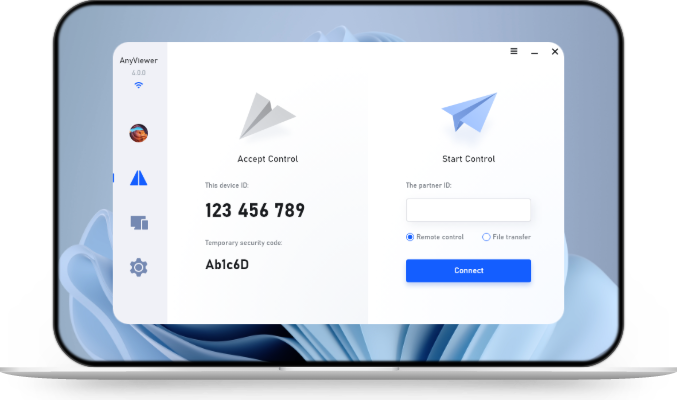
Remote Collaboration & Account Security: AnyViewer
When multiple team members need to run reports on Semrush or Moz Pro simultaneously, remote teams usually hit two major headaches: getting flagged for multi-location logins, and the safety risk of sharing master passwords with freelancers. Plus, buying extra user seats can easily cost an extra $45 to $100 per person every month.
AnyViewer remote desktop software solves all of these problems perfectly.
Stop Paying the "Seat Tax" and Work Together Smoothly
Most premium SEO tools only allow one user at a time. If you want to add team members, platforms force you to pay hefty monthly fees for extra "seats."
With AnyViewer, you can keep your master Semrush or Moz account logged into a single computer at your main office. Remote employees or freelancers can simply use AnyViewer to remotely control that office computer. Everyone can run heavy data audits and export massive reports with zero lag, saving you thousands of dollars on unnecessary sub-accounts.
Prevent Account Bans and Keep Passwords Safe
SEO platforms closely monitor login behavior. If your account is accessed from Chicago, London, and Manila within the same hour, the system will flag it as suspicious, locking you out or banning your account for "account sharing."
- No More Password Leaks: You never have to text your valuable passwords or 2FA verification codes to outside contractors. They just connect to the office computer through AnyViewer and start working. If a freelancer leaves, you simply revoke their access in one click.
- One Single IP Address: Because everyone is technically working on the same office computer, all activity comes from one consistent IP address. This eliminates the risk of multi-location security triggers.
- Bank-Level Encryption: Packed with strong 256-bit ECC encryption, AnyViewer ensures your client data, marketing strategies, and account credentials stay completely safe from hackers, even if your remote staff is using public Wi-Fi.
Conclusion
Choosing between Semrush and Moz Pro is simple: pick Semrush for an aggressive, all-in-one marketing suite, or Moz Pro for straightforward, organic SEO fundamentals.
However, tool selection is only half the battle; team operations matter just as much. By using AnyViewer, your remote team can securely access premium SEO accounts from a single office IP. This clever setup saves you thousands in extra seat fees, protects your master passwords, and eliminates the risk of account bans.
Choose the right data tool for your business, and let AnyViewer keep your teamwork seamless and secure.


 as a preferred
source on Google
as a preferred
source on Google