
10 Best Remote Collaboration Tools for SEO Teams
This guide reviews the top 10 remote collaboration tools for SEO teams to fix workflow bottlenecks, data silos, and security risks. It covers essential platforms for remote access (AnyViewer), SEO data, content editing, and task management.

By Ellie / Updated on June 1, 2026


Managing a search engine optimization (SEO) campaign requires an exceptional level of cross-functional coordination. When your team is scattered across different time zones, keeping track of moving parts like keyword research, technical site audits, content pipelines, and link-building outreach can quickly dissolve into chaos. Without a structured workflow, critical tasks fall through the cracks, reporting gets delayed, and your organic rankings ultimately suffer.
To keep your campaigns running smoothly and predictably, you need a specialized software stack built specifically for distributed marketing workspaces. In this guide, we break down the definitive remote collaboration tools for SEO teams, explore exactly how they drive agency efficiency, and show you a step-by-step framework to configure the ultimate workflow for your business.
What are Remote Collaboration Tools for SEO Teams?
Remote collaboration tools for SEO teams are specialized software platforms that enable distributed SEO strategists, content writers, editors, web developers, and data analysts to align their execution in real time.
Unlike generic project management software that merely tracks deadlines, an optimized SEO collaboration stack bridges the gap between raw data analysis and active deployment. These tools allow your team to build shared keyword universes, monitor live SERP movements collectively, co-edit data-driven content briefs, track technical crawls, and securely manage client-server access. Essentially, they transform isolated data insights into collaborative, repeatable execution without requiring team members to be in the same physical office.
The 10 Best Remote Collaboration Tools for SEO Teams
To build a high-performing remote SEO operation, your stack must balance infrastructure security, data accessibility, and clear task assignment. Below is our curated list of the top 10 tools built to optimize remote marketing workflows.
Category 1: Secure Remote Access & Infrastructure
1. AnyViewer
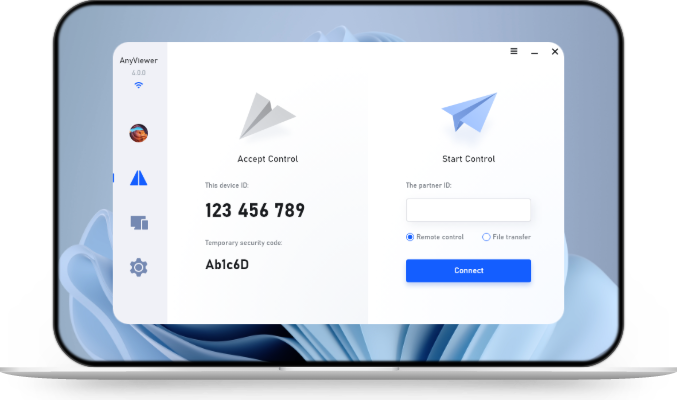
Technical SEO professionals often rely on specialized, locally installed desktop crawlers (like Screaming Frog) configured on high-performance office rigs to analyze massive enterprise sites. AnyViewer is an enterprise-grade remote desktop software that allows distributed SEO specialists to connect to their office workstations or client servers securely from anywhere in the world.
Why it's essential for SEO: Instead of forcing remote workers to run heavy, resource-intensive crawls that crash personal laptops, team members can use AnyViewer to log into a dedicated office computer, launch a 100,000-page crawl, and monitor the progress smoothly. AnyViewer features blazing-fast file transfer speeds, bank-grade ECC 256-bit encryption, and an incredibly intuitive interface that bypasses complex VPN setups. This ensures your technical specialists can access restricted local databases and work on high-stakes indexing fixes securely from home.
2. Bitwarden / 1Password
Managing an agency means handling hundreds of login credentials across various client content management systems (CMS), hosting panels, and social profiles.
Why it's essential for SEO: These secure password management vaults allow administrators to share encrypted access permissions with remote contractors and full-time staff alike. Team members can auto-fill login details for client sites without ever seeing or copying the raw, exposed passwords, keeping your entire client roster safe from credential leaks.
Category 2: All-in-One SEO Data Platforms
3. Semrush
You cannot run a data-driven remote team without a centralized competitive intelligence hub. Semrush provides specialized multi-user workspaces designed for agile teams.
Why it's essential for SEO: Its "Projects" feature allows team members to share live keyword position tracking groups, set up automated technical site audit alerts, and track on-page optimization ideas collectively. When an on-page issue is detected, the strategist can instantly flag it within the shared dashboard for the implementation team to address.
4. Ahrefs
Widely regarded as an industry titan for backlink analysis, keyword research, and organic competitor tracking.
Why it's essential for SEO: Ahrefs allows remote agencies to configure shared workspaces where content teams and link-building outreach specialists can collaborate on the same data sets. Outreach managers can flag broken link opportunities and drop them into shared folders so content creators know exactly what type of asset needs to be built to earn the link.
Category 3: Content Co-Editing & Briefing
5. Google Workspace (Docs & Sheets)
High-quality content is the engine that drives organic traffic. Writers, editors, and SEO managers need a fluid environment to build out text assets simultaneously.
Why it's essential for SEO: Google Docs allows content editors to leave real-time inline comments and tag specific writers to fix keyword stuffing, correct heading hierarchies, or insert internal links. Shared Google Sheets are heavily utilized to build dynamic, color-coded content production schedules that keep writers aligned with publication deadlines.
6. Notion
A highly customizable, modular workspace that serves as an internal knowledge base for scaling teams.
Why it's essential for SEO: Notion is ideal for building your team's internal Standard Operating Procedures (SOPs), client onboarding documentation, and semantic content briefs. By creating structured templates, remote writers can instantly understand the exact search intent, word count targets, and primary keywords required for an article before they write a single sentence.
Category 4: Project & Workflow Management
7. ClickUp
Standard spreadsheets break down quickly when an agency scales past a handful of clients. ClickUp offers a fully customizable project management framework built to handle intricate workflows.
Why it's essential for SEO: ClickUp allows you to build visual Kanban boards or Gantt charts tailored to the exact lifecycle of an SEO campaign. Tasks move seamlessly through custom statuses such as "Keyword Mapping," "Briefing," "Writing," "SEO Review," "Ready for Dev," and "Indexed." This gives project managers instant visibility over content production speeds and developmental bottlenecks.
8. Asana
A highly polished, intuitive project management tool that excels at mapping out complex dependencies between cross-functional teams.
Why it's essential for SEO: In SEO, a task often cannot proceed until the previous step is finalized. Asana allows you to build strict task dependencies; for example, a web developer is automatically notified to implement schema markup or fix a Core Web Vital issue *only after* the technical SEO strategist approves the audit parameters.
Category 5: Communication & Data Visualization
9. Slack
Distributed teams require an organized, real-time communication engine to prevent duplicate work and reduce long email threads.
Why it's essential for SEO: Slack allows you to organize your agency's discussions into dedicated, topic-based channels (e.g., `SEO-industry-updates`, `technical-bugs`, `link-outreach`, `client-approvals`). Integrating Slack with your cloud drives or task managers ensures the entire team receives automated notifications the moment a piece of content goes live or an algorithmic ranking shift occurs.
10. Google Looker Studio
Manually compiling monthly SEO ranking, traffic, and conversion reports can easily waste five to ten hours per client every single month.
Why it's essential for SEO: Looker Studio links directly to Google Search Console, Google Analytics, and premium SEO tool APIs to pull live performance data into interactive, beautiful visual dashboards. Remote teams can look at a single live report to track campaign health, while clients can access the same link at any time to monitor their return on investment (ROI).
Conclusion
To scale organic traffic from a distributed workspace, generic software isn't enough. Implementing the right remote collaboration tools for SEO teams, combining SEO hubs, task managers, and secure remote desktop access like AnyViewer, allows your team to run technical audits and content pipelines seamlessly. Align your tools, secure your workstations, and streamline your workflow to drive consistent SEO growth.



 as a preferred
source on Google
as a preferred
source on Google