
Ahrefs vs Moz: Which SEO Tool Wins? (2026 Edition)
Break away from generic feature checklists. This deep dive dissects the data infrastructure, core workflows, and agency use cases of data-heavy giant Ahrefs versus strategic pioneer Moz to help you solve your team's specific technical bottlenecks.

By Ellie / Updated on June 24, 2026


Choosing the right data analytics platform often determines whether an organic campaign thrives or plummets. If you are stuck deciding between Ahrefs vs Moz, you are not alone. While both software suites are absolute industry giants, they serve completely different workflows and target audiences.
The core debate surrounding Moz vs Ahrefs does not come down to which platform boasts a longer feature list. Instead, it is about aligning your software with your team's current technical bottlenecks.
- Ahrefs: A high-octane, heavy-duty data engine built for deep technical execution and granular competitive intelligence.
- Moz: A guided, highly accessible suite built around strategic community insights, clear onboarding, and high-level visibility tracking.
Let’s break down the data metrics, backlink indexes, and real-world workflows so you can choose the ideal SEO tools Moz vs Ahrefs setup for your business.
Ahrefs vs Moz at a Glance: Fast Facts
|
Feature / Dimension |
Ahrefs |
Moz |
|
Pricing |
Starts at $129/mo (Lite plan; no free trial available) |
Starts at $49/mo (Standard plan; includes a 30-day free trial) |
|
Best for |
Advanced SEO professionals, growth hackers, mid-to-large agencies, and MCNs |
SEO minimalists, solopreneurs, local brick-and-mortar businesses, and beginners |
|
Killer Metrics |
DR (Domain Rating), Live Backlink Count, Traffic Potential |
DA (Domain Authority), PA (Page Authority), Spam Score |
|
Strengths |
Elite crawler capacity, the world's best backlink index, hyper-granular advanced filtering |
Smooth onboarding, robust Local SEO map grids, native white-label reports, top-tier community support |
|
API Access |
✔ (Requires advanced subscription) |
✔ |
Ahrefs Review: The Relentless Data Beast for Power Users
Ahrefs started in 2010 primarily as a backlink analysis tool. Over the years, it has evolved into arguably the most powerful, data-heavy SEO infrastructure on the market. Powered by thousands of servers, Ahrefs crawls over 30 million new web pages every single day.
- Flagship Features: Site Explorer (for competitor deep-dives) and Keywords Explorer, which operates on a massive database of over 28 billion keywords across 10 different search engines.
- The Verdict: Ahrefs is the undisputed favorite among technical SEO specialists, niche site builders, and enterprise agencies that require raw, real-time, and granular data to execute complex link-building and content campaigns.
1. Ahrefs Key Features
Ahrefs has built up quite the army of tools that'll go to war for your SEO.
- Keyword Explorer: Goes far beyond search volume to deliver click-through rate (CTR) predictions, search intent labels, and multi-search engine performance.
- Content Explorer: Discovers low-competition, high-return content ideas and uncovers prime guest-posting opportunities.
- Site Explorer: Houses the industry's most massive active backlink database, making competitor traffic flows transparent.
- Rank Tracker: Monitors desktop and mobile rankings across 170+ countries and regions with 24/7 accuracy.
- Site Audit: Functions like an "MRI scan" for your website, catching every technical flaw blocking search engine bots.
Ahrefs' raw power can be a double-edged sword. For smaller businesses or beginners, facing hundreds of technical errors and dense charts in the Site Audit can cause "analysis paralysis." If you do not have the technical bandwidth to action these advanced metrics, the steep subscription price might feel overwhelming.
2. Ahrefs Pricing
So, how much is this going to cost you?
Ahrefs currently operates on a tiered, usage-based subscription model. Instead of a paid trial, they now offer a free basic tier for verified site owners, alongside five main paid plans:
|
Plan |
Monthly Price |
Annual Price (per month) |
Best For |
Key Limits |
|
Starter |
$29 |
Monthly only |
Beginners & light research |
1 project, 50 tracked keywords, 100 credits |
|
Lite |
$129 |
$108 |
Solo SEOs & small brands |
5 projects, 750 tracked keywords, 500 credits |
|
Standard |
$249 |
$208 |
Growing teams & agencies |
20 projects, 2,000 tracked keywords, 6,000 credits |
|
Advanced |
$449 |
$374 |
In-house SEO departments |
50 projects, 5,000 tracked keywords, 15,000 credits |
|
Enterprise |
$1,499+ |
Custom |
Large organizations |
100+ projects, 10,000+ keywords, full API access |
Important Note on Pricing: Ahrefs no longer offers a $7 trial. Also, keep in mind that they use a credit-based system. Every time you open a new report or filter data, it consumes credits, meaning heavy users might run into overage fees if they choose a tier that's too low.
3. Ahrefs: The Good & The Bad
As with every tool, there's always going to be some good news and some bad news.
Pros:
- Unmatched depth of data; backlink indexes are updated by the hour.
- Tracks real-time organic keyword and traffic gains or losses.
- Superb content and keyword gap tools for intercepting competitor market share.
Cons:
- Steep learning curve; can be highly intimidating for beginners.
- No free trial; the entry-level Lite plan limits several essential features.
- Long-tail keyword search volumes can lean overly conservative.
Moz Pro Review: The SEO Pioneer Built for Guided Insights
As a foundational pillar of the search engine optimization community, Moz (originally launched as the SEOmoz blog in 2004) pioneered how marketers understand search algorithms. Instead of overwhelming users with raw data, Moz Pro focuses on accessibility, guided insights, and proprietary frameworks.
- Flagship Features: The creator of Domain Authority (DA) and Page Authority (PA); predictive scoring metrics that remain the gold standard for measuring link equity during site flips and outreach.
- The Verdict: Moz Pro zeroes in on user onboarding, transparent site health diagnostics, and Local SEO visibility. It acts like a patient mentor, making it an excellent match for generalist marketers, small-to-medium business (SMB) teams, and local service providers.
1. MozKey Features
Do Moz's features stand a real fighting chance against Ahrefs' killer tools? Here's the breakdown:
- Link Explorer: The core reason users choose Moz. It accurately measures a domain's DA, PA, and inbound link profiles.
- Rank Tracking: Offers a clean visualization of your overall SERP (Search Engine Results Page) visibility and tracks competitor movements seamlessly.
- On-page Optimization: A true Moz exclusive. It provides an intuitive, step-by-step blueprint on how to optimize specific page content for target keywords.
- Site Crawl: Swiftly identifies common technical issues and translates them into plain English with clear fixing instructions.
- MozBar: The world-famous, free Chrome extension that allows you to inspect the DA/PA metrics of any website instantly on the go.
2. Moz Pricing
While Ahrefs sets a high financial bar, Moz takes a slightly more accessible approach. In addition to a $49/month Starter plan for solopreneurs, Moz structures its core platform across four main tiers:
|
Plan |
Price (Monthly) |
Campaign Limits |
Keyword Rankings |
Keyword Queries / mo |
|
Starter |
$49 |
1 campaign |
50 keywords |
(Basic access) |
|
Standard |
$99 |
3campaign |
300 keywords |
150 queries |
|
Medium |
$179 |
10campaign |
1,500 keywords |
5,000 queries |
|
Large |
$299 |
25 campaign |
3,000 keywords |
15,000 queries |
If you want to test the waters before pulling out your wallet, Moz offers a 7-day free trial on their Standard and Medium plans.
While these price points are undeniably more palatable than Ahrefs, they still represent a hefty commitment, especially for newly sprouted, bootstrapped businesses where cash flow doesn't exactly grow on trees.
So, while Moz might have won this initial pricing battle, the real question remains: has it actually won the feature war?
3. Moz: The Good & The Bad
Every tool has an angel and a devil on each shoulder, the former raising it up, the latter razing it down.Let's see whether it's the angel or devil on Moz's shoulder that holds the most sway.
Pros:
- Clean, intuitive UI backed by massive educational libraries and great customer support.
- DA/PA metrics remain universally recognized for valuing domain strength.
- Includes high-tier Local SEO modules and offers a generous 75% discount for non-profits.
- Includes a full 30-day free trial.
Cons:
- The backlink index updates significantly slower than Ahrefs.
- Modules like Moz Local and Moz Content must be purchased as separate add-ons.
- The platform does not track advanced SERP features (like AI Overviews) as effectively.
Which Tool Dominates the Crucial SEO Tasks?
Let's put both platforms to the test across four critical SEO battlegrounds to see which one delivers the best results for your daily workflow.
1: Domain Analysis & Organic Traffic Diagnostics
When running a top-line site diagnostic, the workflow philosophies diverge sharply:
- Ahrefs Wins on Depth: Its Site Explorer dashboard matches a professional marketer's intuition. Aside from DR and backlinks, it overlays comprehensive paid search (PPC) and paid traffic trends.
- Moz Focuses on Simplicity: The Moz dashboard lacks paid data. While it introduces "Brand Authority," it lacks the immediate tactical utility found in Ahrefs.
- The Detail That Matters: Ahrefs allows you to cross-reference 10 different trend lines on a single chart and automatically plots major Google algorithm updates (Google Annotations) directly onto your timeline; a must-have for diagnosing sudden traffic drops.
Winner: Ahrefs. The historical algorithm annotations and traffic-by-location depth are superior.
2: Keyword Research & SERP Intelligence in the AI Era
With AI Overviews changing user behavior, keyword tools must provide deeper context.
- Ahrefs' Industrial Filtering: Categorizes keywords into four intent buckets (Informational, Navigational, Commercial, Transactional) and introduces advanced filters like audience lifestyle, profession, and funnel stage.
- Moz's Visual Innovation: Offers an AI-powered Topic Treemap. Color-coded by search intent, this map lets you hover over clusters to map out content hubs easily.
- The Caveat: Moz lacks extensive tracking for dynamic SERP features (such as rich snippets or image packs), which are critical in today's search ecosystem.
Winner: Ahrefs. Higher precision and better alignment with the modern SERP tracking layout. (Note: For sheer volume of SERP feature tracking, Semrush is also a strong alternative here).
3: Backlink Analysis & Competitive Outreach Engineering
Links remain the foundation of search authority.
- Ahrefs (Link Intersect): This is an outreach specialist's dream. You can run queries like: "Show me websites linking to my top 3 competitors, but not to me." You can then instantly filter those results by attributes (Dofollow/Nofollow/UGC) or domain traffic.
- Moz (Compare Link Profiles): While highly functional for checking basic domain metrics, its link gap tool offers minimal filtering options, making it harder to run aggressive, agency-level link acquisition campaigns.
Winner: Ahrefs. Unquestionably. This is the core pillar Ahrefs was built on.
4: Local SEO & Hyper-Targeted Visibility Tracking
When your campaign scales down to brick-and-mortar storefronts, the tables turn.
- Ahrefs' Limitation: While Ahrefs can analyze search metrics down to a postal code level, it completely lacks local listing management, review tracking, or Google Business Profile optimization.
- Moz's Secret Weapon (GeoRank): Moz provides exactly what Ahrefs lacks. Its GeoRank map grid tracker displays keyword rankings across physical neighborhoods using a visual red-to-green matrix. It is the single most compelling way to pitch and prove local SEO progress to clients.
Winner: Moz. A lifesaver for local businesses, multi-location franchises, and local agencies.
Which Software Deserves Your Marketing Budget?
Choose Ahrefs if:
- You are a data-driven agency, growth team, or affiliate marketer scaling content across highly competitive niches.
- Your core strategy relies on reverse-engineering competitor backlink profiles and identifying content gaps.
- You need high-precision filtering and instant technical site audits.
Choose Moz if:
- You are an in-house marketer or a small business owner who wants an intuitive tool that guides you through on-page optimizations step-by-step.
- Your primary target audience is local, and you need robust local map grid tracking to prove ROI.
- You want a flexible platform backed by a generous 30-day free trial to validate your workflow before paying.
Bonus Tip: How AnyViewer Empowers Remote Teams Using Ahrefs and Moz
Let's address the elephant in the room when debating Ahrefs vs Moz: The skyrocketing cost of SEO tools' multi-user seats.
In recent years, major SEO platforms have strictly tightened their login policies. Ahrefs, for instance, heavily restricts simultaneous logins and charges hefty premiums (up to $50/month per additional seat) just to let another team member view your dashboard. If your remote team attempts to log into a single account from different cities or IP addresses, you risk getting flagged, logged out, or hit with unexpected overage fees.
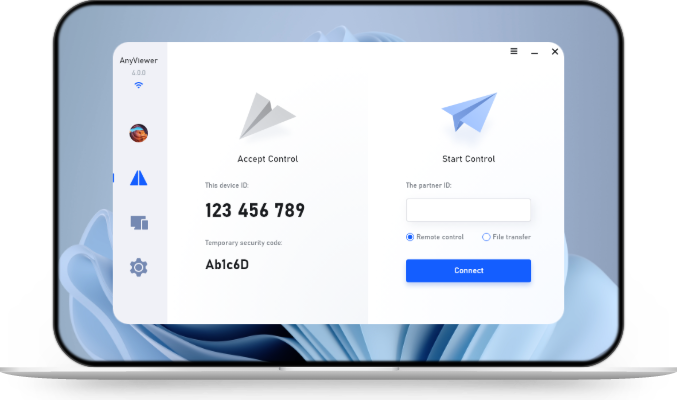
This is where AnyViewer changes the game. It is not an SEO tool, but it is the ultimate remote desktop software infrastructure hack that allows your entire remote team to securely share high-tier Ahrefs or Moz accounts on a single workstation, without violating seat limits or paying a fortune.
The Core Benefits of AnyViewer for Collaborative SEO Teams
Instead of multiplying your marketing budget by buying 5 different seats on Ahrefs or Moz, clever agencies deploy a Centralized SEO Workstation powered by AnyViewer. Here is why this setup is a must-have for modern remote SEO teams:
1. Bypass Expensive Seat Restrictions (Safely & Legally)
By setting up a dedicated, high-performance computer in your main office as your "SEO Data Hub," all your premium Ahrefs and Moz accounts remain permanently logged in on that single machine.
- When a remote writer or auditor needs to run a quick keyword gap report, they simply use AnyViewer to securely remote in, execute the search, and log off.
- Because the tools only detect activity from that one physical machine and one stable office IP, you completely avoid multi-device flagging and account lockouts.
2. Eliminate Account Logging Conflicts
Have you ever been right in the middle of exporting a critical 10,000-row backlink spreadsheet on Moz, only to be kicked off because a coworker logged in from across the world? AnyViewer solves this with structured queue management. Your team can see when the "SEO Hub" is occupied, ensuring that long-running site audits finish cooking without interruption.
3. Lightning-Fast Data & Report Transfers
Ahrefs CSV exports can easily scale into hundreds of megabytes. Instead of waiting for these massive files to sync via slow cloud drives, AnyViewer's built-in high-speed file transfer (up to 10MB/s) lets your data analysts instantly pull heavy reports directly from the remote desktop to their local machines with a single click.
4. Absolute Security via 256-bit ECC Encryption
When sharing access to your core business tools, security is paramount. AnyViewer protects your expensive subscription credentials and proprietary client campaigns with end-to-end 256-bit Elliptic Curve Cryptography (ECC) encryption. Your team members never need to know the actual master passwords to your Ahrefs or Moz accounts; they simply access the desktop securely via AnyViewer.
Conclusion
Choosing between Ahrefs and Moz comes down to your primary business bottleneck:
- Ahrefs is the ultimate data engine for agencies and power users who demand hyper-granular backlink tracking and deep competitor analytics.
- Moz is the ideal suite for SMBs and local brands needing an intuitive, guided platform with robust neighborhood map-grid tracking.
Whichever tool you choose, integrating a remote access solution like AnyViewer allows your team to securely centralize your workstation setup. This eliminates expensive multi-user seat fees and maximizes your software ROI, ensuring your remote team can execute high-impact SEO campaigns seamlessly from anywhere.



 as a preferred
source on Google
as a preferred
source on Google