
How Do You Turn On Privacy Screen (PC, iPhone, Android) | AnyViewer
How do you turn on privacy screen? This guide shows how to turn on privacy screen on iPhone, Android, and PC. Follow simple steps to enable screen privacy mode and keep your data secure anywhere.

By Irene / Updated on March 23, 2026


🌟Key Takeaways
This article explains how privacy screens help protect your on screen content across iPhone, Android, and desktop devices, and shows the easiest ways to enable them.
✔️ Goal: Keep sensitive information private and prevent others nearby from viewing your screen.
✔️ Device Differences: Desktop uses software settings, remote desktop privacy mode, or physical filters. Android offers built in options like hiding notifications and limiting app previews. iPhone focuses on content hiding features instead of a single privacy screen switch.
✔️ Common Methods: Hide lock screen notifications and previews. Restrict app visibility and recent app content. Use physical privacy screen protectors for better viewing angle control.
✔️ Limitations: Most devices do not have a true one click privacy screen feature. Traditional remote desktop tools often require paid plans and have device limitations.
✔️ Top Tool Recommendation: AnyViewer is highlighted as a simple and cost effective solution. It supports multiple systems, including older Windows versions, and allows users to enable privacy mode in one click across devices.
Using a tool like AnyViewer makes it much easier to turn on a privacy screen quickly while improving convenience, flexibility, and security for everyday use.
What is privacy screen on iPhone, Android, and desktop?
A privacy screen is a feature that protects your on-screen content from being seen by others nearby. Whether you are checking messages, working on documents, or using remote desktop tools, privacy controls help keep sensitive information safe. If you’re wondering how do you turn on privacy screen, the steps and options depend on your device type.
PC / Desktop (Including Remote Desktop)
On desktops, privacy screens are usually software-based or physical. If you’re asking how do I get privacy screen on desktop, here are the main options:
- Enable software privacy features: Some remote desktop tools include a “privacy mode” that blacks out the host screen during a session. This is one way to enable a privacy screen while accessing a computer remotely.
- Use OS-level settings: While Windows and macOS don’t have a built-in “privacy screen” toggle, you can:
- Lock the screen quickly (Win + L / Control + Command + Q)
- Disable screen previews and notifications
- Install third-party tools: Some apps can dim, blur, or hide parts of your screen. Or directly use AnyViewer to enable a privacy screen on your computer.
- Use a physical privacy filter: A monitor filter limits viewing angles, which is the most direct way to create a privacy screen effect.
👉 In short, to turn on privacy screen on desktop, you often combine software settings with physical solutions.
Android
Android devices offer more built-in flexibility for android screen privacy mode, though names vary by brand.
Here’s how to enable a privacy screen on Android:
- Enable “Screen privacy” / “Privacy mode” (on supported devices like Huawei, Xiaomi, etc.)
- Go to Settings > Privacy or Display
- Hide sensitive notifications
- Settings > Notifications > Lock screen > Hide content
- Turn off app previews
- Prevent apps from showing content in recent apps view
- Use Secure Folder / Private Space (on some devices)
- Enable screen protection in apps
- Banking apps often block screenshots automatically
Some phones also simulate a privacy screen effect by narrowing viewing angles digitally.
👉 This is the closest built-in experience to a true android screen privacy mode.
iPhone
On iPhone, privacy screens are mostly about hiding content rather than limiting viewing angles. If you’re searching for how to turn on privacy screen iPhone, here’s what you can do:
- Hide lock screen notifications
- Go to Settings > Notifications > Show Previews > When Unlocked
- Enable Face ID attention awareness
- Keeps content hidden until you look at the screen
- Use Screen Time / Guided Access
- Restricts what others can see or access
- App-level privacy protection
- Many apps blur content in the app switcher automatically
👉 While there’s no single toggle to turn on privacy screen iPhone, combining these settings effectively creates a privacy layer.
How do you turn on privacy screen with one-click?
While many traditional remote desktop tools offer Privacy Mode, they often come with strict limitations. Most only support Windows 8.1 and later, require high-cost subscriptions to unlock privacy features, and limit the number of devices or concurrent sessions. These restrictions make them less practical for users who need flexible, everyday access.
In contrast, AnyViewer is designed with convenience and affordability in mind. It supports a wider range of systems, including Windows 7 and Windows Server 2012 R2 and above, making it accessible even on older devices. More importantly, its pricing is straightforward and budget-friendly, with flexible monthly or annual plans.
Even better, AnyViewer delivers a seamless cross-device experience. You can easily enable a privacy screen on iPhone, Android, or desktop in just a few clicks, without complex setup or hidden restrictions. For users who value simplicity, flexibility, and cost efficiency, AnyViewer is a far more convenient choice than traditional remote desktop solutions.
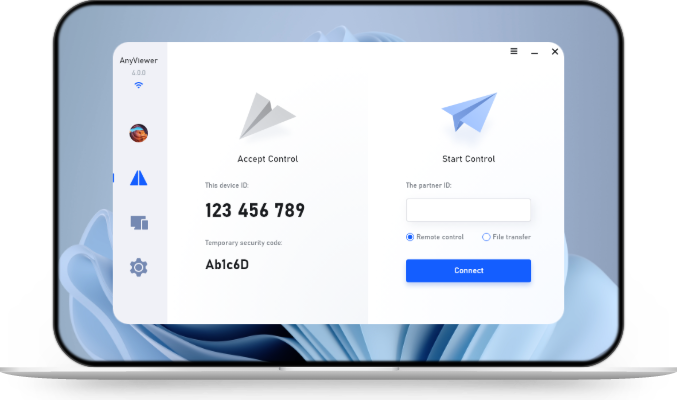
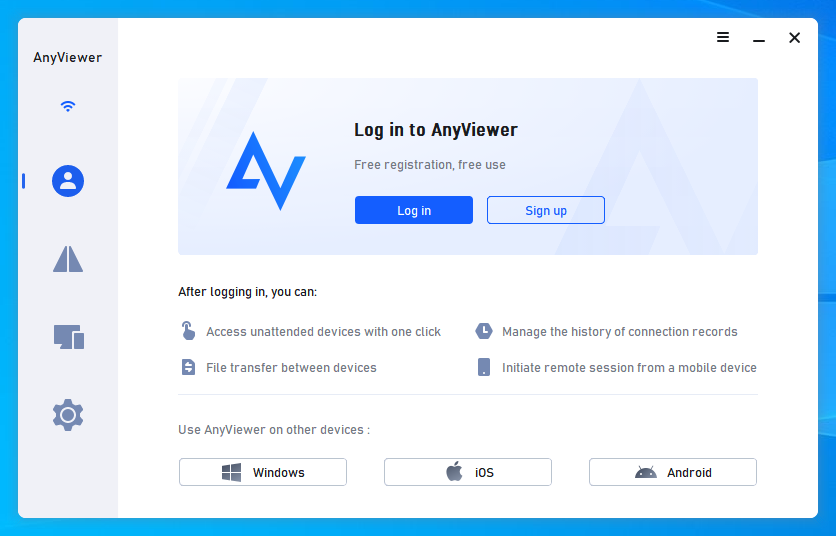
Step 1. On both computers, download, install, and launch AnyViewer. Go to Log in on the Controller computer, and then click Sign up (if you have already signed up on its official website, you can log in directly).
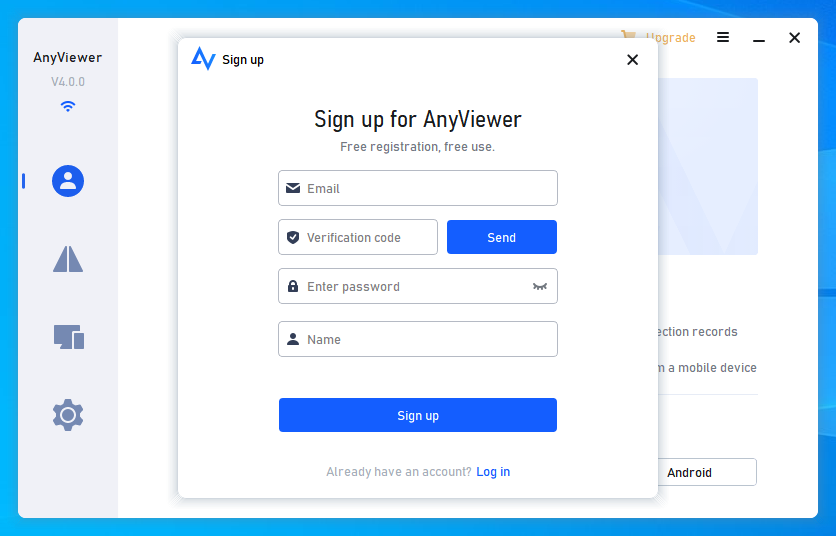
Step 2. Fill out the signup form.
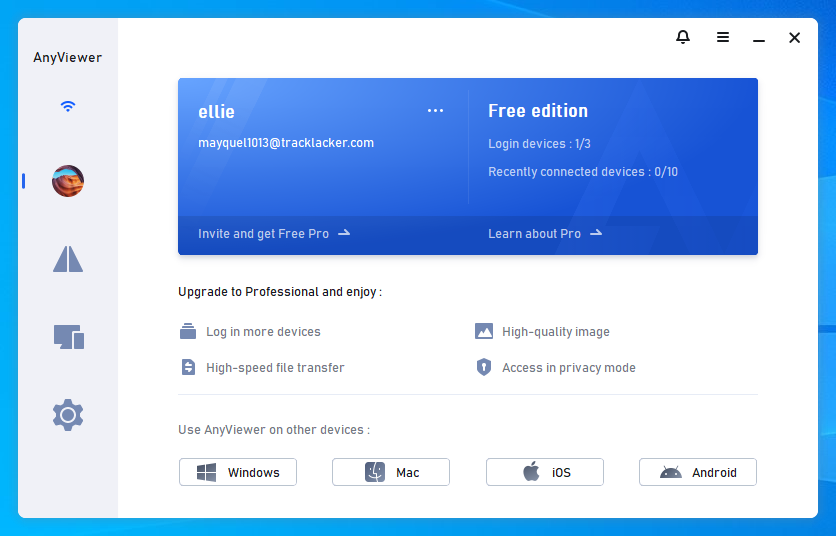
Step 3. You should now see that you have successfully logged into AnyViewer. Your device will be assigned to the account to which you have logged in automatically.
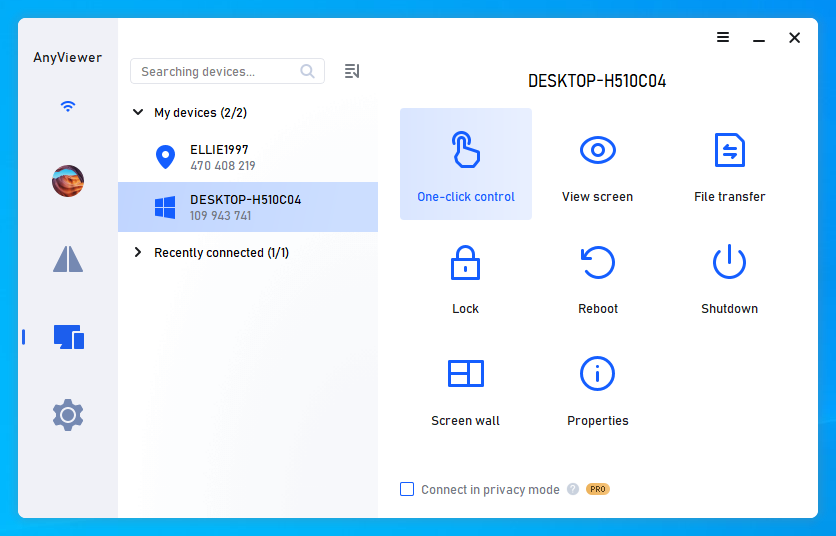
Step 4. Sign in with the same AnyViewer account on both computers, then click the One-click control for unattended remote access. Tick Connect in privacy mode on the bottom if you have upgraded your account.
✎ Upgrade to Professional or Enterprise Plan
Upgrading your AnyViewer account to a Professional or Enterprise plan unlocks several important benefits that make remote access more flexible and powerful:
Increase Connection Channels: Multiple devices can start remote connections at the same time.
Simultaneous Connections: One device can connect to multiple devices simultaneously.
Faster File Transfer: Transfer large files up to 1TB at speeds of 10 MB/s.
Upgrading ensures smoother, more efficient remote management, especially for users handling multiple devices or large data transfers.
Conclusion
Privacy screens help keep your information safe on iPhone, Android, and desktop. AnyViewer makes it easy to turn on privacy mode across all your devices. Upgrading to a Professional or Enterprise plan lets you connect more devices at the same time, manage multiple sessions, and transfer large files faster, making remote access simple and secure.
FAQs
🗨️ How do I turn on privacy screen mode?
On Windows, enable Privacy Mode through your remote desktop tool settings (usually a paid feature). Or you can directly use AnyViewer to turn it on in one click during a remote session, making it faster and more convenient.
🗨️ How do I make my phone screen not visible to others?
You can reduce visibility by lowering brightness, enabling dark mode, or using a physical privacy screen protector. Some apps also offer screen masking features.
🗨️ Does the iPhone have a built-in privacy screen?
No, iPhones do not have a built-in privacy screen feature. You need a screen protector or use features like auto-lock and screen dimming for basic privacy.
🗨️ How does the Samsung privacy screen work?
Samsung devices mainly rely on hardware solutions like privacy screen protectors. Some models also offer “Secure Folder” to hide sensitive content.
🗨️ Can you turn on the privacy screen on Samsung?
There is no native system-wide privacy screen toggle on most Samsung phones. You can use third-party apps or a physical screen protector for better privacy.
🗨️ How to activate privacy screen on Android?
Android does not provide a universal privacy screen feature. You can use screen pinning, privacy apps, or tools like AnyViewer to enable privacy during remote access sessions.



 as a preferred
source on Google
as a preferred
source on Google