
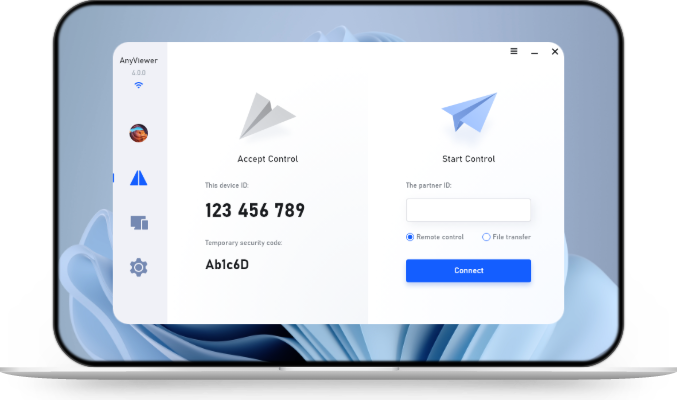
8 Best Unattended Remote Access Software for 2026 [Free & Paid]
Explore the top 8 unattended remote access solutions, including AnyViewer, TeamViewer, and more. Compare features and pros/cons to find the best tool for 24/7 remote maintenance and seamless IT support.

By Ellie / Updated on April 7, 2026


Unattended remote access technology enables remote control of devices without requiring on-site user intervention, making it a vital cornerstone for 24/7 server maintenance, system monitoring, and seamless operations across sectors like IT, healthcare, and education. By eliminating the need for constant human presence, it has become essential for maintaining efficient, uninterrupted business workflows.
However, choosing the right solution can be challenging given the wide variety of tools and often prohibitive pricing tiers for managing multiple devices. Whether you are managing a fleet of office PCs or looking for a reliable Mac unattended remote access setup to reach your Apple workstation from home, finding a cost-effective, high-performance tool is key. To help you find a tool that provides a seamless, "in-person" experience, this guide evaluates eight top unattended remote access solutions based on their key features, pros, cons, and pricing.
What is Unattended Remote Access?
Unattended access is a key feature in remote access technology, enabling users to connect to and control a computer or device without requiring someone on the other end to approve the connection. This is particularly useful for managing numerous devices, performing maintenance, or ensuring system functionality without the need for constant human oversight.
Core Difference: Attended vs Unattended Remote Access
When comparing attended vs unattended remote access, the main difference between these two methods lies in the necessity of human involvement at the host end:
- Attended Access: Commonly used in customer support scenarios, this method necessitates real-time approval or a session code from the user at the remote location before a connection can be established.
- Unattended Access: Eliminates this requirement. It allows technicians or owners to log in at any time, making it the ideal choice for managing servers, remote workstations, or IoT devices where a user may not be readily available to grant permission.
Key Requirements for Implementation
Setting up a reliable system for attended vs unattended remote access requires several technical considerations to balance operational ease with high-level security:
- Remote Access Software: Specialized tools like AnyViewer are tailored to support both modes, offering essential features for seamless, high-speed remote control even when no one is present.
- Permissions and Access Control: Administrators must carefully configure user permissions to determine which devices are eligible for unattended control and who has the authority to bypass manual approval.
- Security Protocols: Because unattended access bypasses manual verification, strong security measures—such as end-to-end encryption, multi-factor authentication (MFA), and robust password policies—are crucial to prevent unauthorized entry.
8 Unattended Remote Access Software
Here are eight reliable unattended remote access tools that let you access devices anytime. Let’s take a quick look at each one.
1. AnyViewer: Best Remote Access Application for Free
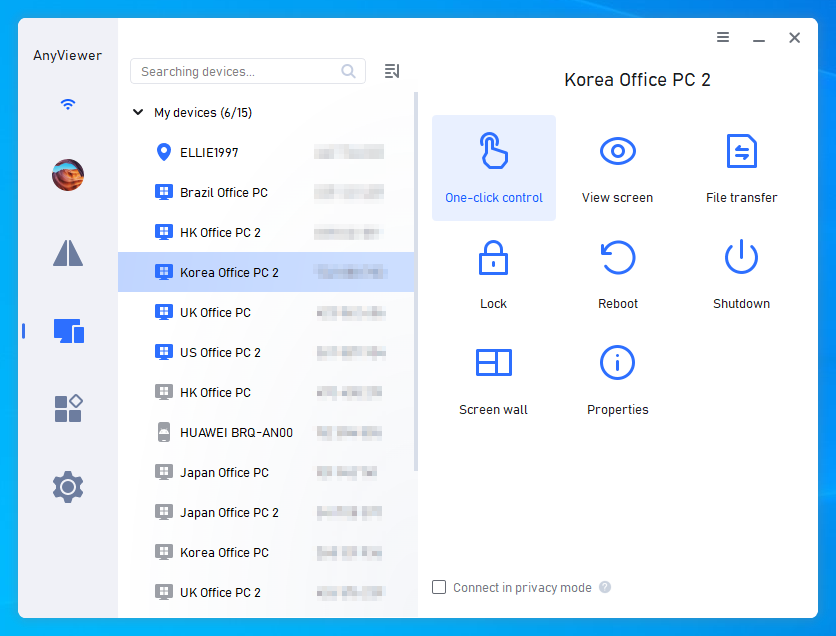
If you're looking for a remote desktop solution that is both powerful and easy to use, AnyViewer is an excellent choice. It’s an all-in-one tool that combines remote control, file transfer, and team collaboration. Whether you want to access your office computer from home or provide remote technical support to clients, AnyViewer makes everything feel as smooth as using a local machine.
AnyViewer has deployed 200+ global acceleration nodes, delivering low latency and ensuring a smooth and responsive experience. It provides crisp, high-resolution visuals, capable of displaying high-resolution screens depending on the host device and network conditions—making it suitable for most daily work and even light creative tasks.
In terms of security, it uses bank-level 256-bit ECC encryption and includes a “Privacy Mode,” allowing you to black out the remote screen with one click to prevent onlookers from seeing your activity.
In addition, it offers advanced features like screen recording, screen whiteboard, and text chat, significantly boosting team collaboration efficiency.
Pros
- Generous Free Plan: Compared to other tools, AnyViewer offers a highly capable free version for both personal and business use.
- Cross-Platform Support: Easily connect between Windows, Mac, iPhone, and Android devices anytime, anywhere.
- Strong Privacy Protection: Features “Privacy Mode” and remote lock to keep your data secure.
- Fast Connection: Powered by 200+ global nodes with low latency for a smooth experience.
- High-Quality Visuals: Supports high-resolution display output depending on device and network.
- Collaboration Tools: Built-in voice chat, shared clipboard, and screen annotation.
Cons
- While AnyViewer excels in performance and ease of use, it currently does not support Linux systems. If you mainly use Windows, macOS, or mobile devices, it’s hard to beat; however, Linux users may need to wait for future updates.
2. Microsoft Remote Desktop: The Native Windows Expert
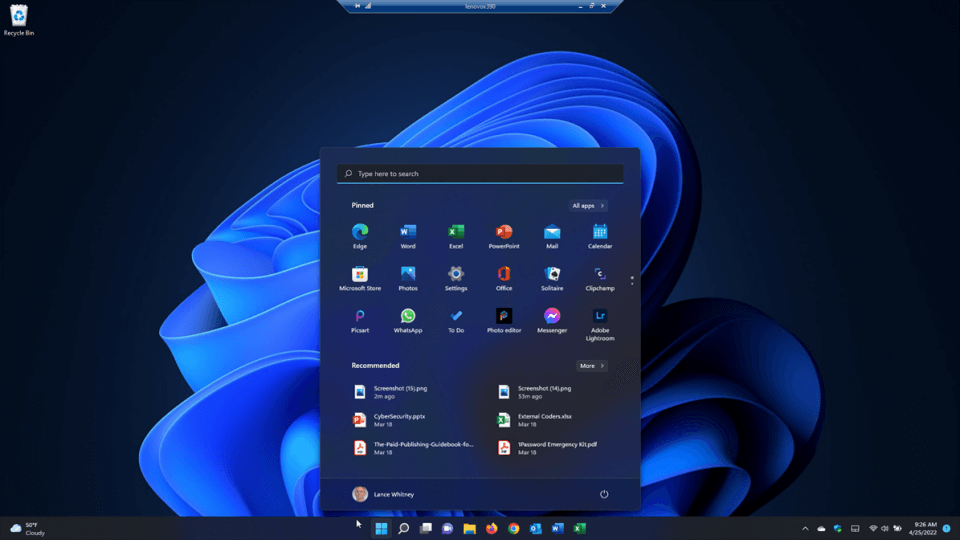
Microsoft Remote Desktop is built directly into Windows, making it one of the easiest ways to access your PC from afar. Because it’s a native tool, it’s incredibly reliable and works smoothly on Windows 8, 10, and 11. It’s perfect if you need to access your office computer while you're at home, or if you need to manage a server.
However, there is one important catch: it only works if you have the Pro, Enterprise, or Server version of Windows. If you are using the "Home" edition, you can use the software to connect to other computers, but people cannot connect to yours.
The interface is very clean and simple, so you don't need to be a tech genius to use it. It handles daily tasks like printing documents remotely or moving files between computers without any issues. When you’re in a session, the connection is usually very clear and smooth, and because it’s a Microsoft product, all your data is kept safe with built-in encryption.
Pros
- Completely Free: No extra software to buy—it’s already in Windows.
- Simple Design: The menu is clean and very easy to navigate.
- Essential Tools: Comes ready to print, share files, and transfer data.
- Rock-Solid Security: Your connection is protected by default.
Cons
- Edition Restriction: Only works on Pro, Enterprise, or Server versions.
- Network Setup: Advanced network configurations might require a bit of extra work.
3. TeamViewer: High-End Features with a Big Price Tag
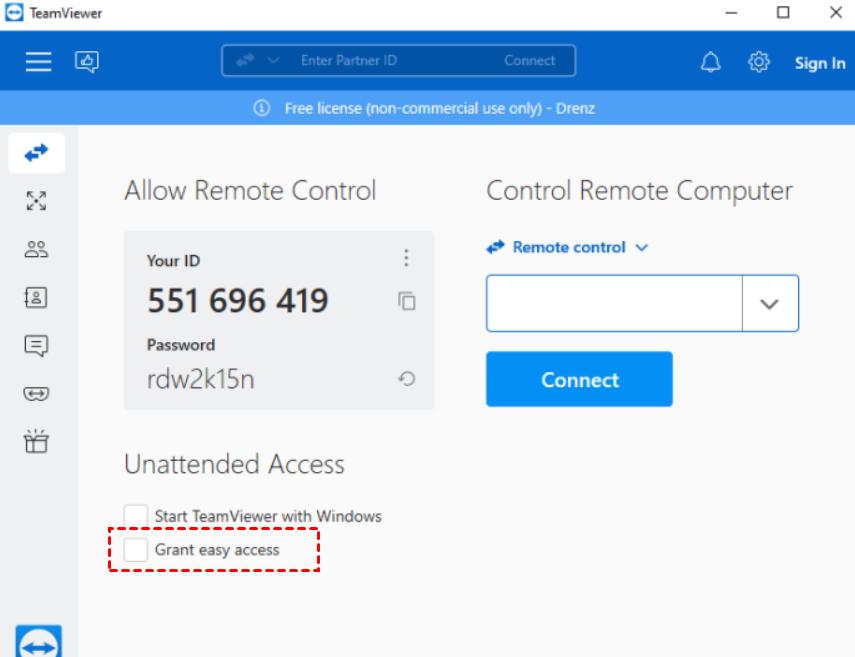
TeamViewer is a giant in the world of remote control software. It has been around for a long time and is trusted by millions of users worldwide. Its biggest strength is its capacity for remote access to unattended computers, which lets you jump into a remote device anytime you need to, without someone having to sit there and click "accept." For big companies and IT experts, it is the gold standard because it rarely fails and handles complex tasks easily.
However, the main problem is the cost. TeamViewer is much more expensive than most other options on the market—sometimes costing two or three times as much as its competitors. Because of this high price, many smaller teams and individuals are starting to look for cheaper alternatives that can do the same job for a lot less money.
Pros
- Famous and Trusted: A well-known brand with a long history of being safe and secure.
- Always Ready: Excellent for managing servers or office PCs that stay on 24/7.
- Loaded with Tools: Includes extra features like Augmented Reality (AR) support.
Cons
- Very Expensive: The price is much higher than that of other similar apps.
- Tricky Contracts: Renewing your subscription can be complicated and costly for small shops.
- Hard for Individuals: The high cost makes it difficult for a single person to justify the price.
4. AnyDesk: Great Compatibility but Prone to Glitches
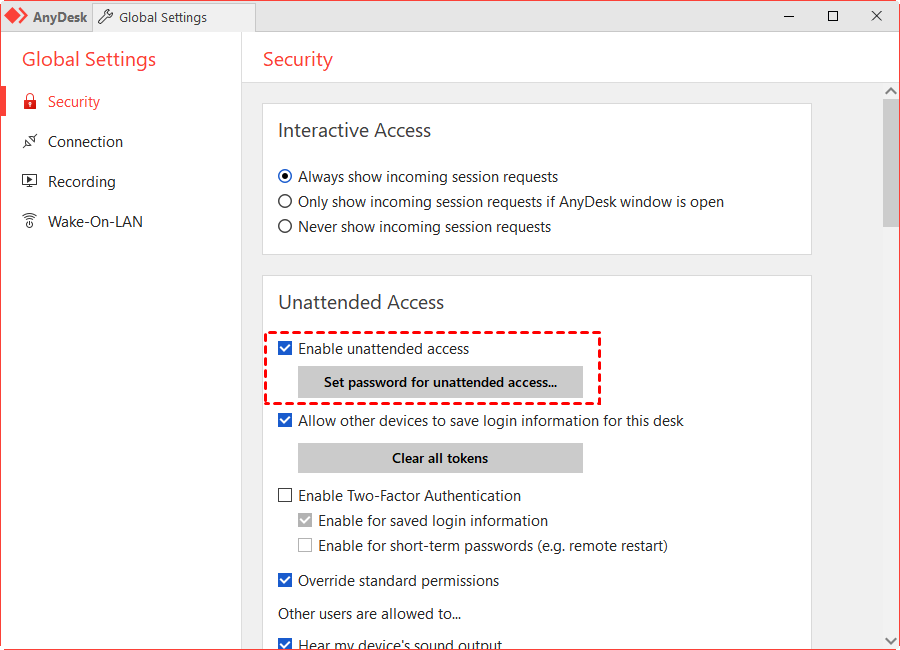
AnyDesk is a popular tool for anyone who needs to control a computer from a different location. Its biggest strength is its ability to connect different types of devices seamlessly. Whether you are using a Windows PC, a Mac, a Linux machine, or even a Chromebook, AnyDesk lets them talk to each other without a hitch. This makes it a go-to choice for tech support teams who have to jump between different systems all day.
However, the experience isn't always perfect because of some annoying technical bugs. For example, Windows users sometimes find that their "Alt" or "Control" keys get "stuck" during a session, which can be very frustrating when you're trying to type. Also, if you use it on a Chromebook, the app sometimes fails to close the connection properly, which might leave your session hanging open when it shouldn't be.
Pros
- Works Everywhere: Connects Windows, Mac, Linux, and mobile devices easily.
- Fast and Responsive: Very little lag, making it feel like you're actually there.
- Small and Quick: The app is tiny, installs in seconds, and doesn't slow down your PC.
Cons
- Keyboard Issues: Some keys might act like they are stuck while typing.
- Connection Hang-ups: Chromebook users may have trouble disconnecting.
- Needs Checking: You have to be careful to ensure your session actually ends.
5. Splashtop: Reliable Performance with Tiered Pricing
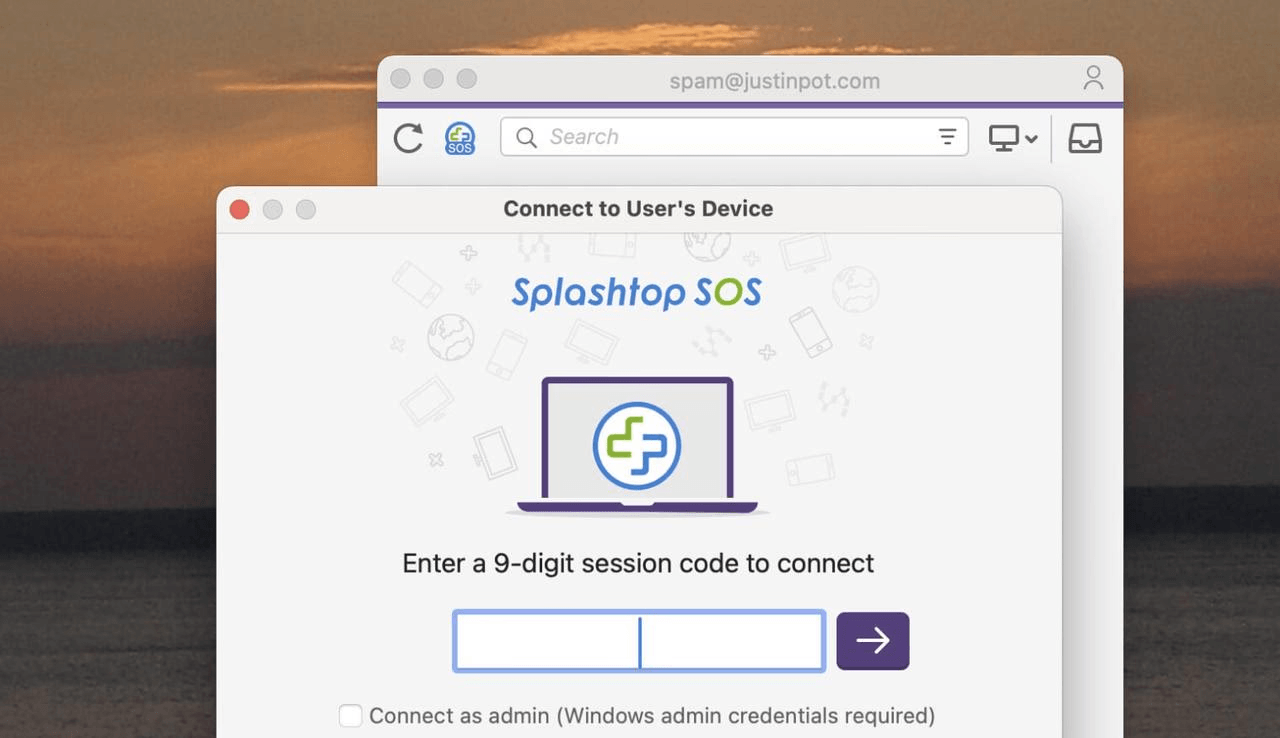
Splashtop has established itself as a versatile remote access powerhouse, working seamlessly across Windows, macOS, Linux, and even mobile platforms like iOS and Android. For business professionals, it offers convenient extras like remote printing and drag-and-drop file transfers, which make managing daily tasks from afar feel almost like sitting at your own desk.
Its main advantage is high-fidelity performance. If you are a designer, video editor, or IT specialist, Splashtop is a top-tier choice. It is capable of streaming high-definition video at 4K resolution at a smooth 60 frames per second. This ensures that your remote connection remains responsive and stable. Additionally, its multi-monitor support is a major productivity booster, allowing you to view and interact with several remote screens within a single, manageable window.
Pros
- All-in-One Compatibility: Works across all major operating systems and mobile devices.
- Crystal Clear & Fast: 4K/60FPS streaming makes it great for professional work.
- Secure by Design: Uses enterprise-grade encryption (TLS 1.2 and 256-bit AES) for every session.
Cons
- Premium Costs for Features: Advanced options like SSO and SAML are locked behind higher-tier plans.
- Basic Interface: The look and feel are functional but may seem simple compared to high-end alternatives.
6. ScreenConnect: Secure and Professional with a Premium Price
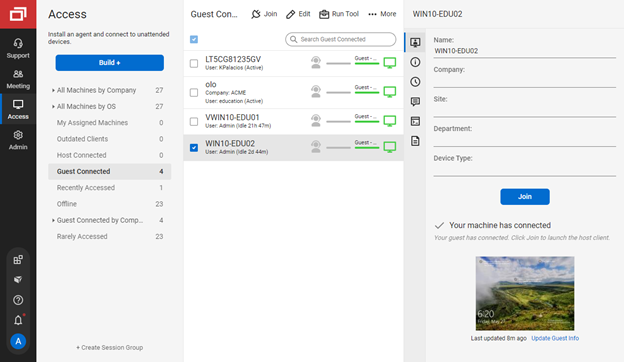
ScreenConnect is a top-tier remote support tool known for its flexibility and ease of use. It works across almost every device, including Windows, Mac, Linux, and mobile phones. Whether you are managing a single computer or an entire office, it provides a smooth connection that is simple to navigate.
Its main advantage is industry-leading security. If security is your top priority, ScreenConnect is hard to beat. It uses high-level encryption and multi-factor authentication (MFA) to keep hackers out. One of its coolest features is "one-time admin login," which creates a unique, encrypted key for every single session. This ensures that your login details are never reused or stolen. It also plays well with other professional tools like Outlook and Zendesk, making it a favorite for customer support teams.
Pros
- Very User-Friendly: The menus are intuitive and easy to learn.
- Works on Everything: Supports Windows, macOS, Linux, and mobile.
- Maximum Security: Offers one-time passwords and detailed activity logs.
- Great Connections: Easily connects with apps like Zendesk and Outlook.
Cons
- High Cost: It is more expensive than most other remote tools.
- Learning Curve: Some of the advanced features might take time to master.
7. HelpWire: The Free Newcomer for Quick Support
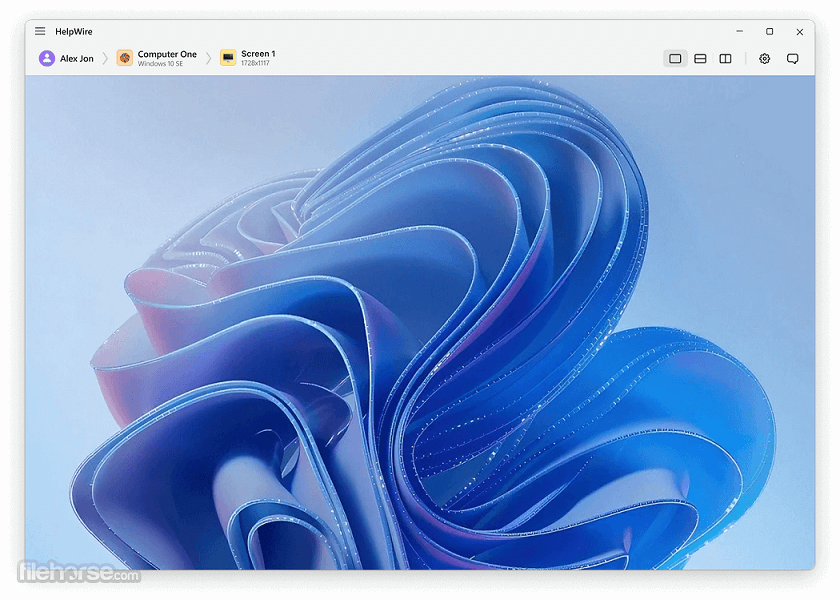
HelpWire is a relatively new player that has gained attention by offering its unattended remote access features completely free for both personal and business use. This makes it an incredibly attractive option for freelancers, small startups, or anyone on a tight budget. It’s designed to be lightweight, meaning it won’t slow down your computer, and it focuses on getting you connected as quickly as possible.
The main advantage is 100% free for everyone. Unlike many competitors that limit their free versions to "personal use only," HelpWire allows you to support clients or manage office PCs without a subscription. As of early 2026, it has expanded its capabilities to support unattended access on Linux (including Ubuntu), a previous limitation. It’s perfect for simple troubleshooting, quick file transfers, and basic remote management.
Pros
- Truly Free: No "commercial use" warnings or hidden monthly fees.
- Now Supports Linux: Unattended access is available for Windows, Mac, and Linux.
- Instant Setup: You can start a session just by sending a simple link to a client.
Cons
- Fewer "Extra" Tools: It lacks the advanced bells and whistles found in expensive suites.
- No Mobile Support: Currently, you cannot use it to remotely access a smartphone.
- Simple Management: It doesn’t yet have the deep enterprise-level user controls.
8. Zoho Assist: Web-Based Convenience with Slower Speeds
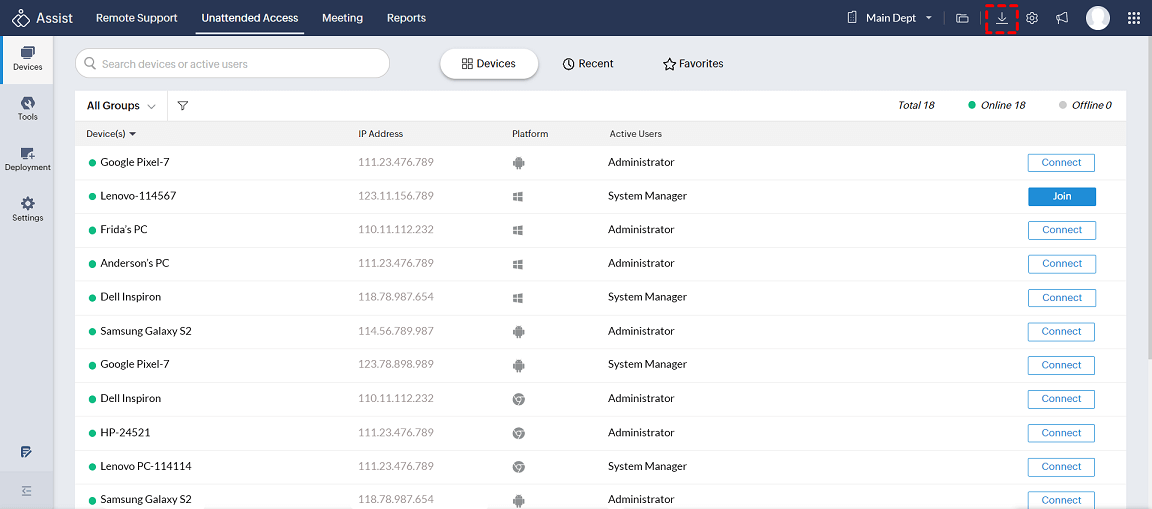
Zoho Assist is a highly versatile remote support tool that stands out for its broad compatibility. Whether you are managing an older Windows XP machine, a modern Mac, a Linux system, or an Android device, it provides a consistent and reliable experience.
Beyond its standard desktop application, Zoho Assist offers a fully functional web-based version. This means you can launch and manage remote sessions directly from your browser without needing to install any bulky software—a massive plus if you are jumping between different computers. It also includes helpful productivity features, such as the ability to leave "sticky notes" on the remote desktop or listen to audio from the remote device, which is particularly well-supported on Windows systems.
Pros
- Browser-Based Access: Run your remote sessions from any web browser without needing to install anything.
- Huge Compatibility: It works on almost anything, including older computers and Android phones.
- Built-in Notes: Easily leave messages or instructions on the remote PC screen.
Cons
- Slower Performance: The connection speed can feel a bit sluggish compared to faster, more reactive tools.
- Audio Limitations: While it supports remote audio, it works most reliably on Windows.
- Premium Features: Many of the most advanced "pro" features are locked behind a paid subscription.
Key Benefits of Unattended Remote Access
Unattended access provides significant benefits for both businesses and IT professionals, including:
- 24/7 Remote Maintenance and Support: Allows IT teams to perform tasks without needing someone physically present at the remote device, reducing downtime and ensuring productivity.
- Cost Savings: Reduces travel and on-site visit costs, especially beneficial for managed service providers (MSPs) who support clients across multiple locations.
- Enhanced Efficiency: IT teams can schedule updates and maintenance during off-peak hours, minimizing disruptions to daily operations and preventing potential issues from escalating.
- Supports Remote Work: Employees can access their workstations from any location, offering greater flexibility and improved productivity.
- Strong Security Measures: With encryption and multi-factor authentication, businesses can ensure remote sessions are secure and compliant with data protection regulations.
Overall, unattended access helps businesses maintain operational continuity, reduce costs, and enhance the efficiency of IT support processes.
Practical Applications of Unattended Remote Access
Unattended access technology plays a vital role across various industries, transforming how organizations operate, troubleshoot, and provide services. Below are some of its key applications:
IT and Technical Support
- Remote Troubleshooting and Maintenance: IT professionals can diagnose and fix issues remotely on servers and workstations without needing the end-user’s presence. This is especially useful for after-hours maintenance and support.
- Automatic Software Updates and Patch Management: Unattended access allows the remote deployment of software updates and security patches across multiple devices, ensuring systems stay secure and up-to-date without manual intervention.
Telecommuting and Remote Work
- Accessing Office Computers: Employees working remotely can use unattended access to connect to their office desktops, enabling them to work with all files and applications as if they were in the office.
- Flexible Work Arrangements: Unattended access supports flexible work policies by allowing seamless access to corporate resources from any location, ensuring business continuity regardless of circumstances.
Education and Training
- Remote Software Access: Students and educators can access specialized software hosted on school computers from remote locations, facilitating virtual labs and eliminating the need for physical presence.
- System Administration: IT staff can manage educational systems, perform updates, and troubleshoot without being on-site, ensuring uninterrupted operation of the institution’s infrastructure.
Healthcare
- Remote System Monitoring and Management: Healthcare IT professionals can remotely manage critical systems and devices, ensuring they remain operational and reliable, which is crucial for patient care.
- Telehealth Support: Healthcare providers can access medical software and patient records remotely, enabling telehealth services and improving patient care by facilitating consultations and monitoring from any location.
Manufacturing and Industrial
- Remote Equipment Monitoring: Engineers and technicians can monitor and manage industrial equipment remotely, ensuring optimal performance and preventing downtime without needing to be on-site.
- Predictive Maintenance: Unattended access allows for remote access to equipment data and analytics tools, enabling predictive maintenance and helping identify potential issues before they lead to costly downtime.
These use cases demonstrate the diverse applications of unattended access in improving efficiency, streamlining operations, and ensuring business continuity across industries. By offering a secure and reliable way to manage devices and systems remotely, unattended access is reshaping modern work and service delivery.
Unattended Remote Access for Mobile Devices: Is it Possible?
Many users wonder if they can achieve the same level of unattended access for mobile devices as they do for PCs. The answer is yes, though the implementation varies due to OS-specific security constraints:
-
iPhone (iOS): Due to Apple’s strict privacy architecture, achieving true iPhone unattended access can be challenging. While third-party software like AnyViewer enables smooth screen sharing and cross-platform viewing, deep remote control often requires leveraging the built-in "Control Nearby Devices" feature available in iOS 16 and later, or utilizing specific Mobile Device Management (MDM) profiles for enterprise environments.
-
Android: In contrast, unattended Android remote control is more straightforward. By installing a dedicated Host application or plugin (such as those offered by TeamViewer or Zoho Assist) and granting the necessary "Accessibility Service" permissions on the device, technicians can take command of the Android device from a PC without requiring someone on the other end to manually accept the connection.
Regardless of whether you are using iOS or Android, it is crucial to enable Multi-Factor Authentication (MFA) whenever you configure unattended access to ensure that sensitive mobile data remains secure and protected against unauthorized entry.
Conclusion
Choosing the right unattended remote access solution comes down to balancing your performance needs with your budget. If you require industry-standard, high-end features, established tools like TeamViewer or ScreenConnect are reliable, though often costly. For those seeking a balance of high performance, security, and affordability, AnyViewer is an excellent choice, providing a robust free version that is hard to beat for both personal and professional use.


 as a preferred
source on Google
as a preferred
source on Google