
How to Deploy Remote Desktop Software with Group Policy
This guide walks Windows domain administrators through a controlled remote desktop software rollout with Group Policy. You will learn how to prepare an MSI distribution point, scope a pilot organizational unit, assign the package, verify installation, troubleshoot common failures, and plan a safe rollback. It also explains when a startup script is more appropriate and how AnyViewer can fit an enterprise mass-deployment workflow.

By Ellie / Updated on August 27, 2026


How to Deploy Remote Desktop Software with Group Policy: The Short Answer
To deploy remote desktop software with Group Policy, place a vendor-provided MSI package on a read-only network share, create and link a dedicated Group Policy Object to a pilot organizational unit, then assign the package under Computer Configuration > Policies > Software Settings > Software installation. Reboot a test computer, confirm the policy and application installed correctly, and expand the scope only after reviewing logs and security settings.

If the vendor supplies only an EXE, use a computer startup script with the vendor-documented silent switches instead of trying to add the EXE as a software-installation package. For organizations that want remote support after rollout, AnyViewer remote desktop software offers an MSI-based mass-deployment path for Enterprise environments. The software choice still needs approval from your security, legal, and IT teams before domain-wide deployment.
Only access devices, accounts, and files that you own or are explicitly authorized to use.
Before You Deploy: Requirements and Decisions
Group Policy software installation works best for domain computers that can reach a domain controller and the installer share during policy processing. Remote laptops, shared permissions, and endpoint security controls can cause production results to differ from lab test results.
|
Decision |
Recommended choice |
Why it matters |
|
Installer format |
Use a vendor-supported MSI when available |
Computer-assigned MSI packages are handled natively by Group Policy. |
|
Target scope |
Pilot OU or security-filtered device group |
Limits disruption and makes failures easier to diagnose. |
|
Distribution path |
UNC path such as \\fileserver\software\package.msi |
Clients must resolve and read the same network location; a local drive path will not work. |
|
Execution context |
Computer assignment for device-wide software |
Installation occurs at startup and does not depend on a user having local admin rights. |
|
Remote/off-network PCs |
Use a management platform or ensure pre-logon network access |
A machine that cannot contact AD or the share cannot process the deployment reliably. |
|
Rollback |
Test uninstall behavior and retain the prior package |
Removal needs its own change plan. |
Validate the installer signature and hash, review vendor documentation, and confirm how unattended access is authorized. Do not weaken endpoint protection merely to install a package.
How to Deploy Remote Desktop Software with Group Policy Step by Step
1. Prepare the MSI and a secure distribution point
Put the approved, current MSI in a versioned folder on a reliable file server. Grant administrators change rights, and only the necessary domain computers read access. Avoid broad write permissions because a replaced installer could spread to every target.
Use a UNC path, not a mapped drive or local path. Microsoft’s Group Policy software installation guidance specifically uses the full UNC path when adding a package. From a pilot endpoint, confirm that the computer can resolve the server and read the file.
2. Create a pilot OU and dedicated GPO
Place representative computers in a pilot OU, including an office PC and, if relevant, a VPN laptop. Create a clearly named GPO and link it to that OU. Keep this deployment separate from baseline policies so it can be disabled or rolled back independently.
3. Assign the package to computers
- Edit the pilot GPO and open Computer Configuration > Policies > Software Settings > Software installation.
- Right-click Software installation, select New > Package, and enter the full UNC path to the MSI.
- Select Assigned. Review advanced deployment options only when the vendor documentation requires a transform or specific package behavior.
- Confirm that security filtering applies to the intended computers and that both the share and NTFS permissions allow those computer accounts to read the package.
- Close the editor and document the package version, GPO link, owner, approval, and rollback procedure in the change record.
4. Apply, reboot, and verify the pilot
Update policy or wait for refresh, then restart the pilot. A computer-assigned package installs before sign-in. Check the application and service, test a connection between authorized devices, and review Group Policy and application logs. Use gpresult /h report.html or the Resultant Set of Policy to confirm scope.
5. Expand in stages and monitor
Roll out by OU, site, department, or maintenance ring. Pause between rings to catch authentication, firewall, bandwidth, or support issues. Tell users why the software is present, who may connect, whether approval is required, and how to report suspicious prompts.
When to Use a Startup Script Instead of MSI Assignment
Group Policy Software Installation accepts Windows Installer packages, not arbitrary EXE installers. If only an EXE is available, create a computer startup script under Computer Configuration > Policies > Windows Settings > Scripts (Startup/Shutdown), using silent parameters documented by the vendor. Startup scripts run in the Local System context, so treat them as privileged code.
A production script should detect the installed version, log locally, return useful exit codes, and avoid downloading from the public internet at boot. Group Policy remains a poor fit for devices that rarely contact the domain.
|
Method |
Best fit |
Main limitation |
|
Computer-assigned MSI |
Domain PCs that can reach AD and a file share at startup |
Requires an MSI and often a restart. |
|
Computer startup script |
Vendor-supported EXE with documented silent switches |
More scripting, logging, detection, and rollback work. |
|
Endpoint management platform |
Internet-first or frequently off-network devices |
Requires another management service and licensing review. |
Why AnyViewer Can Fit a Group Policy Deployment
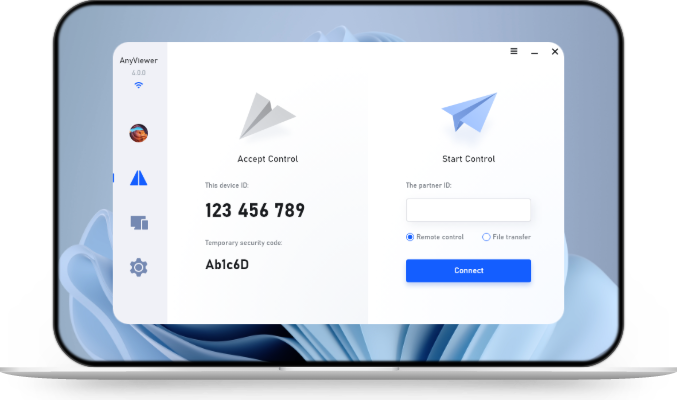
For a Windows domain that needs a centrally deployed remote-support application, AnyViewer provides an official MSI mass-deployment guide. Its current documentation states that the MSI package is available for Enterprise users and describes placing the MSI in a shared folder, linking a GPO, assigning the package, and updating policy. This makes it relevant when an administrator wants a supported MSI workflow instead of repackaging an EXE.
- Centralized MSI deployment across selected domain computers.
- Attended Remote Support for sessions that begin after the remote user approves a request.
- Unattended Remote Access for assigned, authorized devices when organizational policy permits it.
- Remote File Transfer and collaboration features for approved support workflows, subject to the selected plan and platform.
If this matches your environment, review the AnyViewer remote access features and test its MSI in an isolated OU before production. AnyViewer is not the right deployment choice when your organization has not approved third-party remote-control software, when endpoints are not Windows domain devices, or when the required plan, platform, access direction, or control does not match your policy.
Do not silently enable unattended access for every endpoint. Define who can connect, how devices are assigned, how access is revoked, and how users recognize an approved support session.
Troubleshooting a GPO Remote Desktop Software Deployment
|
Symptom |
Likely cause |
What to check |
|
Package never installs |
GPO not in scope |
OU link, security filtering, WMI filters, gpresult, and inheritance. |
|
Installer cannot be found |
Share or DNS problem |
UNC path, name resolution, SMB access, and computer-account read permissions. |
|
Works in office but not remotely |
No domain/share access at startup |
Pre-logon VPN, network timing, or an internet-based management alternative. |
|
Install repeats or hangs |
Package detection or installer issue |
Application log, MSI event entries, vendor log, pending restart, and package version. |
|
App installs but cannot connect |
Service, firewall, or policy restriction |
Approved firewall rules, service state, network egress, security product alerts, and vendor requirements. |
|
Users can change critical settings |
Insufficient access governance |
Vendor role controls, local admin rights, device assignment, and organization policy. |
Restart a clean pilot once on the office network and once under remote-worker conditions. This exposes the gap between a configured GPO and an endpoint that can actually retrieve the package.
Security and Rollback Checklist
- Approve the vendor, version, installer source, code signature, and file hash.
- Use least-privilege share and NTFS permissions; domain computers need read access, not write access.
- Scope the GPO to a pilot OU before broad deployment.
- Define attended versus unattended access, authorized support roles, device ownership, and revocation.
- Keep endpoint protection and firewall changes narrowly scoped and documented.
- Notify users how a legitimate support request appears and how to report an unexpected one.
- Test upgrade, uninstall, and rollback paths before the production wave.
- Retain deployment and session records only as allowed by law and organizational policy.
For a managed rollout, download or obtain the approved AnyViewer MSI through your Enterprise workflow, follow the official deployment guide, and validate Remote Control on authorized pilot devices. You can also review the product’s remote desktop solution before selecting the final access model.
Final Takeaway
The safest way to deploy remote desktop software with Group Policy is to treat it as a controlled change, not a one-click push. Use a signed MSI on a protected UNC share, target a pilot OU, verify policy and installer logs, test the real remote-support workflow, and expand in rings. If you choose AnyViewer, its Enterprise MSI deployment path can reduce packaging work, while your organization remains responsible for authorization, access governance, user communication, and rollback.



 as a preferred
source on Google
as a preferred
source on Google