
How to Screenshot on Mac While Using Remote Desktop
If you're wondering how to screenshot on Mac while Remote Desktop, this guide explains the easiest methods and the best tools to capture remote screens. It also covers top remote desktop screen capture software, including free options for Windows users.

By Ellie / Updated on November 26, 2025


How Do You Take a Screenshot on Mac While Using Remote Desktop?
Taking screenshots on a Mac is usually easy, but it gets tricky in a Remote Desktop session. Many users searching for how to screenshot on Mac while using remote desktop find that standard shortcuts may not work, and sometimes you end up capturing only your local Mac screen or missing the remote content. If you're using Windows via Microsoft Remote Desktop, keyboard mapping differences make it even more confusing, especially for those trying to learn how to screenshot on Mac while remote desktop on Windows 10 and 11.
This happens because your Mac has to manage both local macOS commands and the remote system's controls at the same time, causing conflicts with keystrokes. Different remote apps, like Microsoft Remote Desktop, Chrome Remote Desktop, AnyDesk, or TeamViewer, handle screenshots differently, so the process changes slightly depending on the software.
This guide explains every method to take screenshots on a Mac during a Remote Desktop session, particularly helpful if you're trying to figure out how to screenshot on Mac while remote desktop with keyboard. Whether you want the full screen, just the remote window, or a selected area, this guide also covers fixing shortcut conflicts, locating saved screenshots, and avoiding quality loss from compressed remote windows.
By the end, you'll know exactly how to capture screenshots efficiently on any remote system without frustration.
Default Mac Screenshot Shortcuts
Before tackling screenshots in Remote Desktop, it helps to know how macOS normally handles them. These shortcuts form the basis for capturing content, though they may behave differently when a remote session is active.
Key macOS Screenshot Shortcuts:
- Command + Shift + 3 (Capture Entire Screen): Captures your whole Mac display, including the Remote Desktop window as it appears on your screen. Some remote apps may intercept it, but it generally works reliably.
- Command + Shift + 4 (Capture a Selected Area): Turns your cursor into a crosshair so you can select exactly what to capture. Great for isolating a remote window or a specific part of it.
- Command + Shift + 4, then Space (Capture a Specific Window): Changes the cursor to a camera icon to capture a single window cleanly. Some remote windows may not register properly, but it's useful when it works.
- Command + Shift + 5 (Screenshot Toolbar): Opens a panel to capture the entire screen, selected portion, specific window, or even record your screen. You can also choose where to save and set timers. Behavior may vary in remote sessions.
- Command + Shift + 6 (Capture Touch Bar): Captures only the Touch Bar. Not relevant for remote sessions, but handy on older Macs.
Understanding these shortcuts sets a strong foundation. If remote apps interfere, it's usually due to keyboard redirection rather than the shortcuts themselves. Next, you'll learn how to capture just the Remote Desktop window without grabbing your whole Mac screen.
How to Screenshot the Remote Desktop Window Only
Mac users often need screenshots of just the Remote Desktop window, without your dock, menu bar, or other apps. This is useful for work, proof, or collecting info from a remote system. Remote windows can act differently, so a few tricks may help you get a clean shot.
Method 1: Use Command + Shift + 4, then Spacebar (Window Screenshot Mode)
This is the most reliable macOS method for capturing a specific window.
Here's how to do it:
Step 1. Press Command + Shift + 4.
Step 2. When the crosshair appears, press Spacebar.
Step 3. Your cursor becomes a camera icon.
Step 4. Hover over your Remote Desktop window.
Step 5. Click to capture only that window.
If the Remote Desktop app is treated as a standard macOS window (which it usually is), this will produce a clean screenshot with perfect window boundaries. However, some users find that RDP windows render as “layers” rather than true windows. When this happens, the camera icon may either:
- Not detect the window properly
- Capture the wrong window
- Capture a transparent or black image (rare but possible)
If this happens to you, use the next method instead.
Method 2: Use Command + Shift + 4 (Selection Mode)
This method works every time, even if macOS doesn't detect the RDP window as a selectable object.
Step 1. Press Command + Shift + 4.
Step 2. Drag the crosshair over the exact area you want to capture.
Step 3. Release to take the screenshot.
This gives you manual control, allowing you to frame the remote window exactly. It's perfect when:
- The remote window is unusually shaped
- You want to exclude toolbars or borders
- You want to capture only a certain part of the remote display
- Window-detection mode doesn't work
Although it's manual, it results in extremely clean screenshots.
Method 3: Use Command + Shift + 5 (Screenshot Toolbar)
This method provides more control and lets you preview the capture area before saving.
Step 1. Press Command + Shift + 5.
Step 2. Choose Capture Selected Portion.
Step 3. Resize the frame to fit the Remote Desktop window.
Step 4. Click Capture.
This is ideal for users who need precision or want to adjust the frame slightly before taking the screenshot. It also lets you save directly to folders other than your desktop.
Capturing only the remote desktop window on macOS isn't difficult once you know which method works best for your app and setup. The next section explains how to screenshot inside the remote computer itself, which is essential when you need the highest-quality screenshots with no compression or artifacts.
How to Screenshot Inside the Remote Computer (Remote OS Level)
The best quality screenshots often come from the remote computer itself, not your Mac. This avoids compression, scaling, or glare from the remote window. It's perfect for capturing software interfaces, error messages, system settings, high-res graphics, instructions, or troubleshooting. Here are the ways to screenshot directly on Windows, macOS, or Linux remotely.
Screenshot on a Remote Windows PC (from Mac)
If you're connected to a Windows computer through Microsoft Remote Desktop, AnyViewer, or another tool, you can use the Windows-level screenshot shortcuts. This is especially helpful if you've been trying to learn how to screenshot on Mac while Remote Desktop Windows 10 using keyboard shortcuts.
The key challenge is that the Mac keyboard does not have a native Print Screen (PrtScn) key, but remote apps convert certain key combinations to trigger Windows screenshot functions.
Here are the Windows screenshot shortcuts from a Mac keyboard:
1. Fn + Shift + F11
Triggers the equivalent of PrtScn in many RDP environments.
2. Fn + Shift + Option + F11
Equivalent to Alt + PrtScn, which captures the active window only.
3. Windows + Shift + S (Snipping Tool)
The Snipping Tool overlay appears in the remote machine.
This allows you to select:
- Rectangular region
- Freeform region
- Window
- Full screen
Screenshots are copied to the remote clipboard, not the Mac clipboard.
4. Use Windows Snipping Tool or Snip & Sketch manually
Inside the remote machine:
Step 1. Press the Windows key.
Step 2. Search Snipping Tool or Snip & Sketch.
Step 3. Capture your screenshot normally.
Step 4. Save it inside the remote machine.
Screenshot on a Remote macOS Machine (from Mac)
If you're controlling another macOS device remotely (via VNC, TeamViewer, or AnyDesk), simply use the standard Mac shortcuts inside the remote machine:
- Command + Shift + 3 – Full remote screen
- Command + Shift + 4 – Selected region
- Command + Shift + 4 + Space – Window only
These save directly to the remote Mac's desktop.
Bonus tip: Best App for Better Remote Screenshot Control on macOS
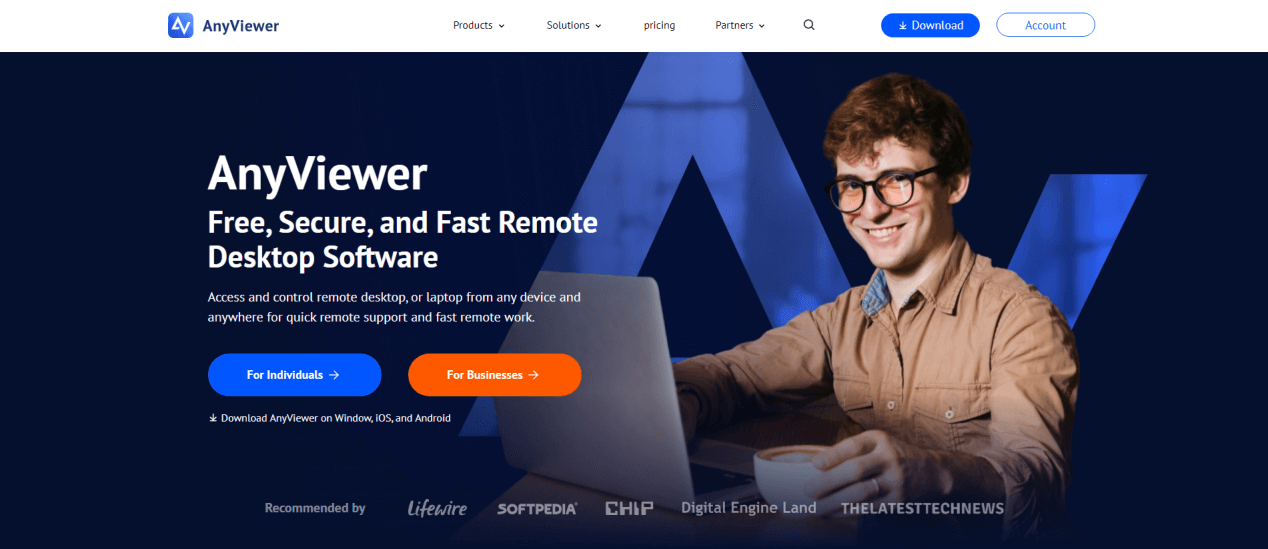
If you frequently capture screenshots during remote sessions, relying on traditional keyboard shortcuts can quickly become frustrating, especially when macOS and Windows use different key mappings. A dedicated remote access tool with integrated screenshot functionality can save time, reduce errors, and deliver clearer results.
AnyViewer is an excellent choice for this. It provides built-in, high-quality screenshot tools that allow you to capture the remote screen in full resolution with a single click. Since the capture occurs directly on the remote device, you avoid issues like blurry images, resized windows, or shortcut conflicts. AnyViewer also supports fast file transfer and multi-device connections, making it ideal for IT support, remote work, training, and documentation.
If you want precision, speed, and consistent screenshot quality across platforms, AnyViewer offers a much smoother experience than relying on shortcuts alone.
Conclusion
Taking screenshots on a Mac while using Remote Desktop doesn't have to be complicated. Once you understand how macOS shortcuts translate inside remote sessions, and when it's better to capture screenshots directly on the remote system, you'll be able to grab clean, accurate images with confidence.
Whether you're snapping your entire Mac screen, selecting just the Remote Desktop window, or capturing content from inside the remote OS itself, you now have several effective methods at your disposal. Pairing these techniques with a powerful tool like AnyViewer ensures you get high-quality screenshots quickly and effortlessly, no matter what platform you're working with.


 as a preferred
source on Google
as a preferred
source on Google