Core ComparisonQuick OverviewFeaturesPricingSecurityPerformanceUse CasesSmall BusinessLarge EnterpriseRemote SupportCommercial UseCross-PlatformRemote GamingDecision SupportUser ReviewsFAQsHow to ChooseBest AlternativeDownload AnyViewer
Start with AnyViewer for easier, safer and worry-free remote access to any device.

Quick Comparison of RemotePC vs. TeamViewer

Category RemotePC TeamViewer
Best For SMBs & individuals needing basic, reliable access. Large enterprises managing massive, complex IT setups.
Free Plan 7-day free trial only (No permanent free tier). Free for personal use (Triggers strict commercial blocks).
Ease of Use Lightweight & simple dashboard, ideal for beginners. Feature-rich & complex, designed for professional IT pros.
Performance Good for standard office tasks; can lag on web/classic modes. Industrial-grade speed, ultra-smooth multi-session handling.
Pricing Dirt cheap (Low per-computer annual billing). Premium pricing (Expensive per-user/concurrent model).
Security Solid standard protection (TLS v1.2, 256-bit AES, 2FA). Top-tier compliance (GDPR/HIPAA, advanced audits, BYOC).

Which Is Better for Remote Access?

Feature RemotePC TeamViewer
Unattended Access
Drag-and-Drop File Transfer
Remote Printing
Multi-to-Multi Monitor Support
Session Recording
In-Session Text Chat
Built-in Voice & Video VoIP Chat
Mobile Access iOS & Android iOS & Android
Connection from Windows, macOS, Linux, iOS, Android, Chrome OS, Fire OS, Remote Web Client Windows, macOS, Linux, iOS, Android, Chrome OS, Raspberry Pi, Remote Web Client
Connection to Windows, macOS, Linux, Android, Raspberry Pi, Chrome OS Windows, macOS, Linux, iOS, Android, Chrome OS, Raspberry Pi
Security TLS v1.2 / AES-256 bit + Personal Key + 2FA AES-256 bit + RSA Verification + 2FA
Remote Reboot
Wake-on-LAN
Enterprise-Grade Script Deployment
Third-Party IT Integrations
AR Remote Assistance
Enterprise IoT Device Monitoring
Built-in Service Desk & Ticketing Integration

Feature Insight: In this TeamViewer vs RemotePC comparison, RemotePC is the ultimate budget-friendly choice for daily remote access, while TeamViewer is an expensive, all-inclusive powerhouse built for complex enterprise IT management.

RemotePC vs TeamViewer Cost and Licensing Comparison

Plans

RemotePC TeamViewer
For free

None

  • 7-day free trial only
  • No permanent free tier

Free for strictly non-commercial use

  • 1 licensed user
  • 3 managed devices
  • 1 channel
For single users

Start from $1.84 to $6.22/month

  • 1 user license
  • 1 to 10 managed computers
  • Unlimited concurrent sessions

Start from $24.90 to $50.90/month

  • 1 licensed user
  • 3 to 200 managed devices
  • 1 channel
For teams

Start from $18.72/month

  • Unlimited users
  • 50 managed computers
  • Centralized user management

Start from $112.90/month

  • 15 licensed users
  • 300 managed devices
  • 1 concurrent channel (Additional channels available for purchase)
For corporations

Start from $37.47/month

  • Unlimited users
  • 100+ managed computers
  • Mass deployment & SSO support

Start from $229.90/month

  • 30 licensed users
  • 500 managed devices
  • 3 concurrent channel (Additional channels available for purchase)

Pricing Insight: RemotePC offers cheap per-computer pricing, while TeamViewer demands premium per-user rates built for high-budget enterprise operations.

Security Comparison of TeamViewer vs. RemotePC

Security Measures RemotePC TeamViewer
AES 256-bit Session Encryption
Two-Factor Authentication (2FA)
Trusted Device Verification
Remote Screen Blackout (Privacy Mode)
IP / User Block and Allowlist
Session Idle Timeout (Auto-Disconnect)
Centralized Security Policy Deployment
Single Sign-On (SSO) Support
SOC 2 Type 2 & HIPAA Compliance
Advanced Conditional Access (Time/Location Rules)
Comprehensive Enterprise-Wide Admin Audit Logs
Bring Your Own Certificate (BYOC) Authentication
FIDO2 / Hardware Security Key Redirection
Windows LAPS Integration (Local Admin Passwords)
Exponential Brute-Force Attack Protection

Security Insight: RemotePC covers all standard security basics, while TeamViewer delivers advanced, industrial-grade protection.

RemotePC vs. TeamViewer Performance Comparison

Performance Metrics RemotePC TeamViewer
Frame Rate (FPS) Solid 30 FPS; stuttery on heavy video. Up to 60 FPS; ultra-smooth animations.
Latency & Responsiveness Good locally; slight lag over long distances. Near-instant worldwide; zero noticeable delay.
Bandwidth Efficiency Standard compression; requires stable internet. Dynamic compression; smooth even on weak networks.
High-Res & Multi-Monitor Handling Works fine; lags on heavy 4K layouts. Industrial-grade; flawless on 4K monitor arrays.
File Transfer Speed Average; best for docs and small folders. Exceptional; dedicated pipeline maximizes throughput.
Resource Consumption Feather-light; minimal impact on old PCs. Noticeably heavier background footprint.

Insight: RemotePC covers all standard security basics, while TeamViewer delivers advanced, industrial-grade protection.

RemotePC vs. TeamViewer for Small Businesses

Category RemotePC TeamViewer
Budget-friendly pricing with high return on investment
RemotePC is highly budget-friendly; TeamViewer is too expensive for small operations.
Ability to add unlimited users without extra fees
RemotePC allows unlimited users; TeamViewer charges strictly per user and channel.
Effortless setup and deployment for non-technical teams
RemotePC allows unlimited users; TeamViewer charges strictly per user and channel.
Inclusion of essential remote access tools out of the box
Both cover daily essentials; TeamViewer includes expensive enterprise overkill.
Reliable access to 24/7 live customer support
RemotePC offers 24/7 support to all; TeamViewer prioritizes corporate clients.

Insight: RemotePC offers affordable scalability for small businesses, while TeamViewer remains a pricey enterprise luxury.

RemotePC vs. TeamViewer for Large Enterprises

Category RemotePC TeamViewer
Automated mass deployment across thousands of global endpoints
TeamViewer handles flawless global rollouts; RemotePC lacks advanced policy automation.
Granular conditional access and zero-trust security policies
TeamViewer features full zero-trust access; RemotePC uses basic role permissions.
Advanced identity management with automated SCIM provisioning
TeamViewer automates lifecycles via SCIM; RemotePC only supports basic SSO.
Real-time audit trailing and enterprise SIEM system integration
TeamViewer integrates directly with SIEM; RemotePC relies on standard event logs.
Complex multi-environment management and regional compliance controls
TeamViewer provides multi-tenant structure; RemotePC lacks complex profile isolation.

Insight: TeamViewer delivers a robust, zero-trust infrastructure for global enterprises, while RemotePC remains too basic for complex corporate environments.

Comparing TeamViewer vs. RemotePC for IT Support

Category RemotePC TeamViewer
Seamless on-demand attended remote support via instant invitations
TeamViewer offers seamless QuickSupport apps; RemotePC sessions lack custom branding.
Deep integrations with external IT service desks and enterprise CRM tools
TeamViewer integrates natively with major ITSMs; RemotePC relies on basic APIs.
Multi-session handling and seamless session transfers between technicians
TeamViewer features smooth tabbed multi-sessions; RemotePC lacks easy agent transfers.
Mobile device troubleshooting including full remote control and diagnostics
TeamViewer controls iOS/Android flawlessly; RemotePC mobile is mostly viewing-only.
Built-in background IT monitoring, patch management, and asset tracking
TeamViewer embeds full RMM tools; RemotePC lacks advanced endpoint tracking.

Insight: TeamViewer provides a powerhouse environment for multi-platform IT help desks, while RemotePC remains a basic access tool without deep service integrations.

RemotePC vs. TeamViewer for Commercial Use

Category RemotePC TeamViewer
Interruption-free licensing without false-positive commercial blocks
RemotePC avoids false blocks; TeamViewer frequently triggers disruptive popups.
Strict adherence to global data privacy and enterprise compliance
TeamViewer holds top compliance certs; RemotePC covers basic standards.
Financial predictability with transparent contractual and billing terms
RemotePC offers flat-rate billing; TeamViewer enforces rigid auto-renewals.
Secure and fluid external access for third-party vendors and clients
TeamViewer allows instant external links; RemotePC requires manual provisioning.
Broad operational versatility across commercial server and host fleets
TeamViewer handles headless servers perfectly; RemotePC management is basic.

Insight: RemotePC offers a transparent, hassle-free commercial model, while TeamViewer provides elite compliance bound by rigid contracts.

RemotePC vs. TeamViewer for Cross-Platform Remote Access

Category RemotePC TeamViewer
Seamless feature parity across major desktop environments
Both deliver full-featured, high-speed performance across primary desktop environments.
Robust access to backend infrastructure and headless servers
TeamViewer offers deep native Linux integrations; RemotePC works but features feel basic.
Full remote control and troubleshooting for mobile ecosystems
TeamViewer provides full control over major mobile brands; RemotePC is mostly view-only.
Adaptability to diverse client fleets and lightweight systems
TeamViewer fully supports Chromebook hosting; RemotePC restricts newer ChromeOS to viewer-only.
Frictionless clientless connectivity via modern web browsers
Both provide excellent web-based portals for instant connection without installing software.

Insight: TeamViewer rules the cross-platform arena with flawless control over mobile, Linux, and niche systems, while RemotePC remains best optimized for standard Windows and Mac environments.

RemotePC vs. TeamViewer for Remote Gaming

Category RemotePC TeamViewer
High-frame-rate game display streaming capabilities
RemotePC Performance Viewer hits 60 FPS; TeamViewer struggles with high-motion gaming.
Low-latency controller input and mouse tracking
RemotePC minimizes input lag; TeamViewer exhibits noticeable cursor delay in games.
Native gamepad and hardware peripheral pass-through
Neither supports native gamepads; RemotePC handles basic USB redirection better.
Real-time game audio and sound synchronization
RemotePC syncs audio with 60 FPS video; TeamViewer suffers from occasional audio drift.
High-motion 3D graphics compression quality
RemotePC maintains 3D graphics clarity; TeamViewer pixelates heavily during fast movement.

Insight: RemotePC outpaces TeamViewer in gaming thanks to its 60 FPS Performance Viewer, though neither can match dedicated gaming-first software.

What Users Are Saying About RemotePC and TeamViewer?

This TeamViewer vs RemotePC reviews comparison is based on customer feedback taken from Software Advice on July 9, 2026.

RemotePC

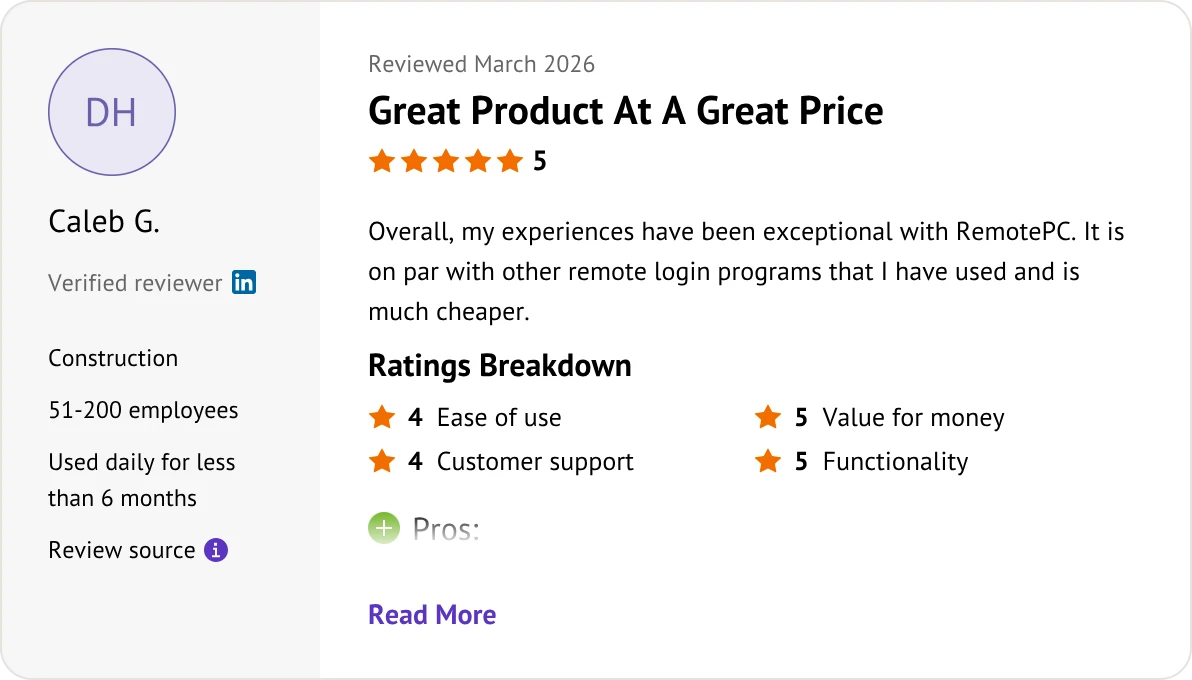
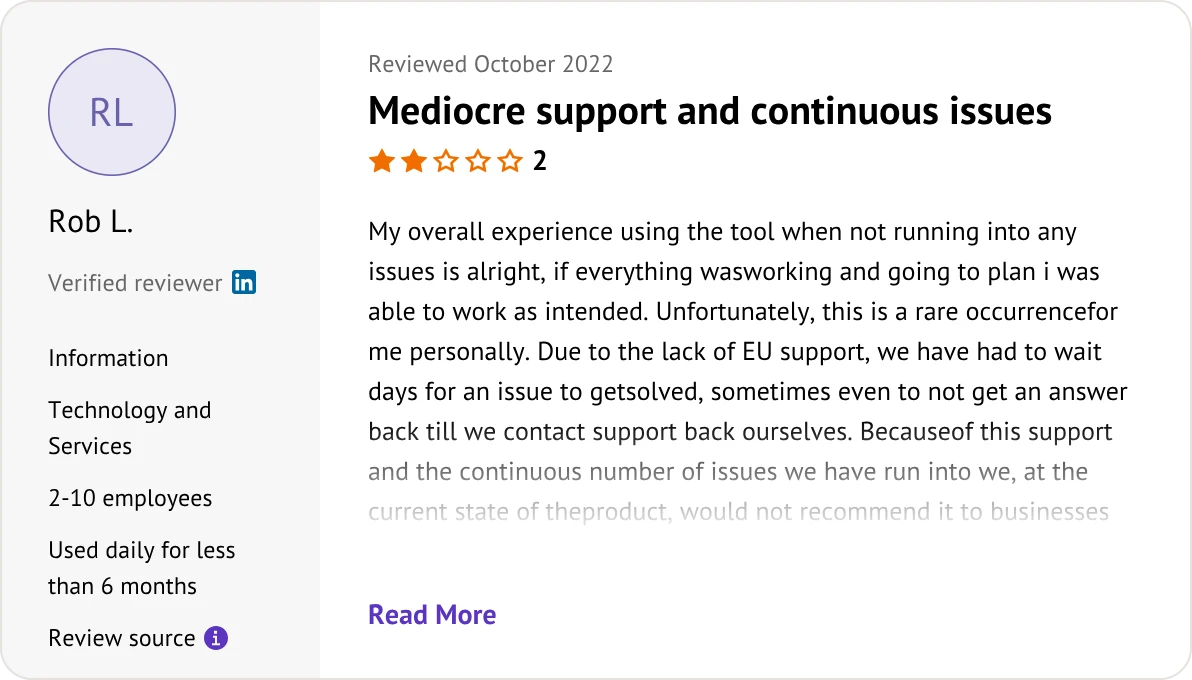
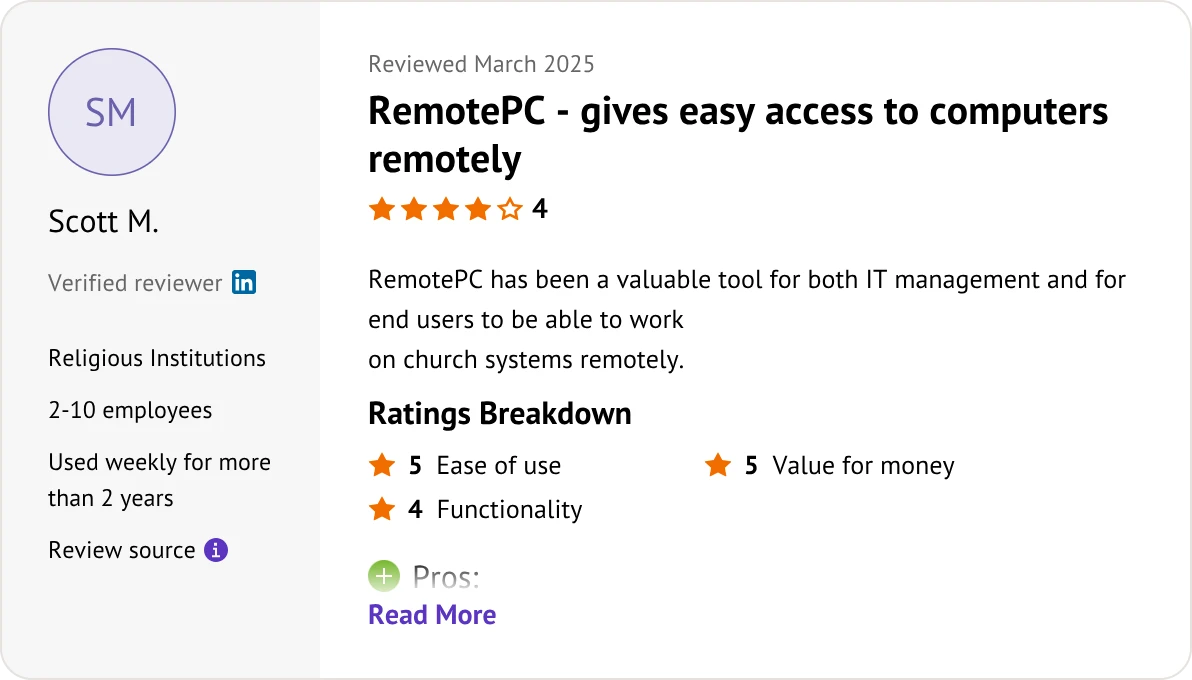
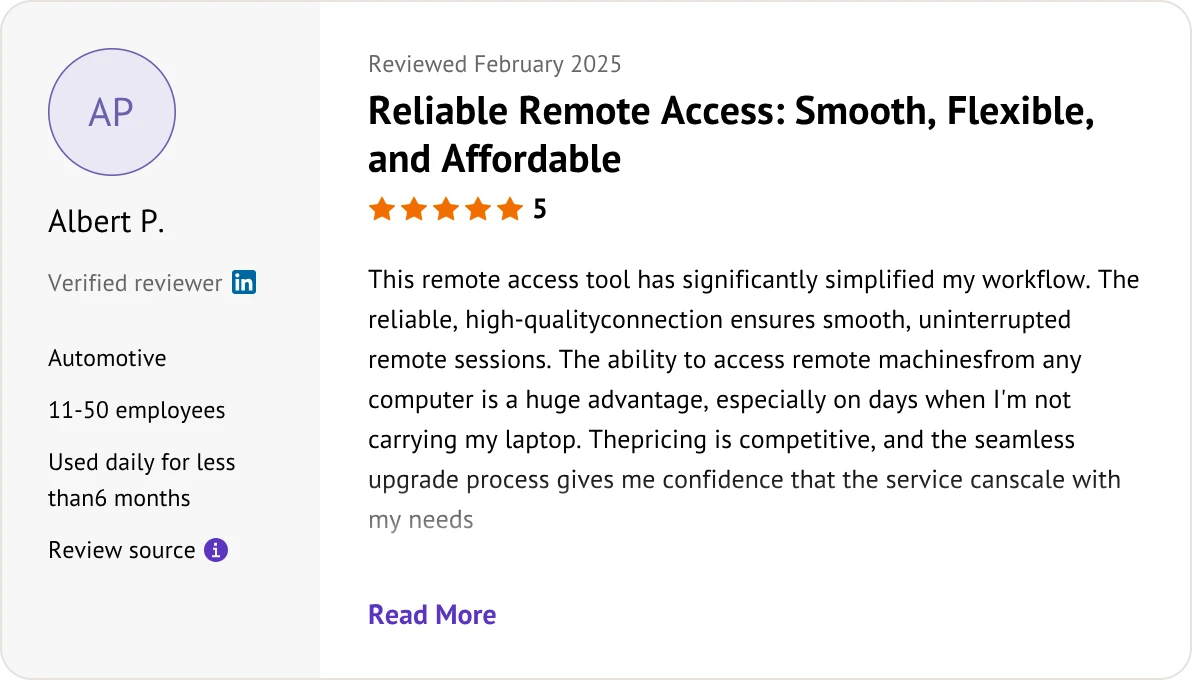
RemotePC user rating
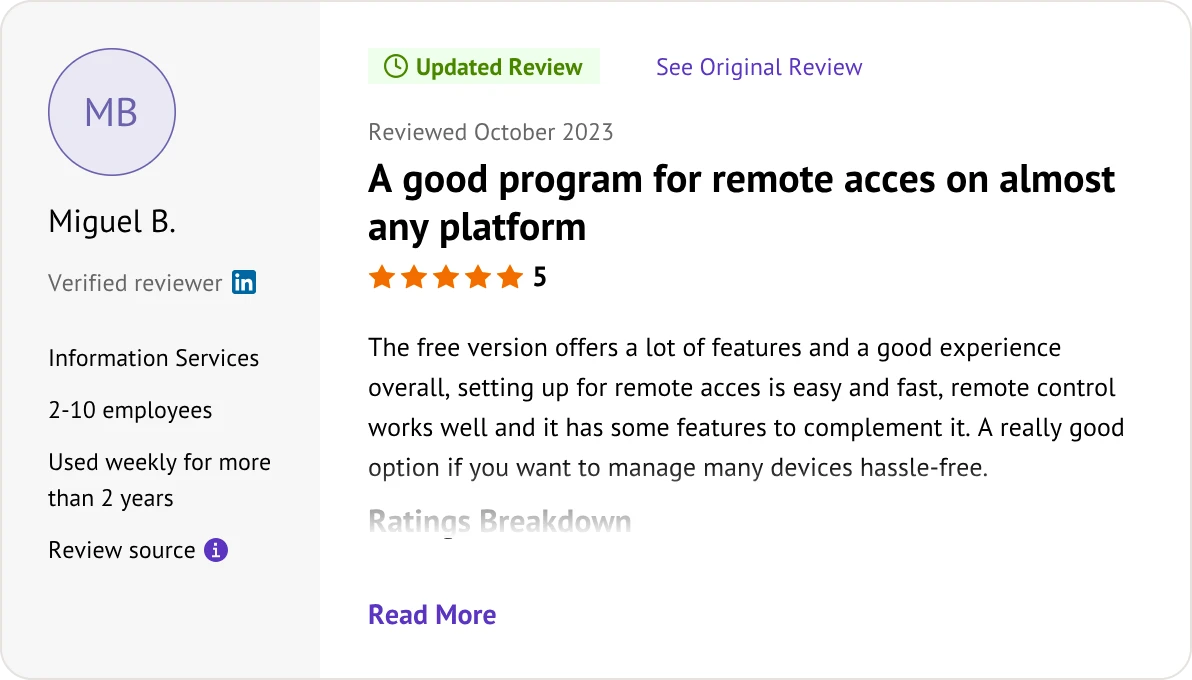
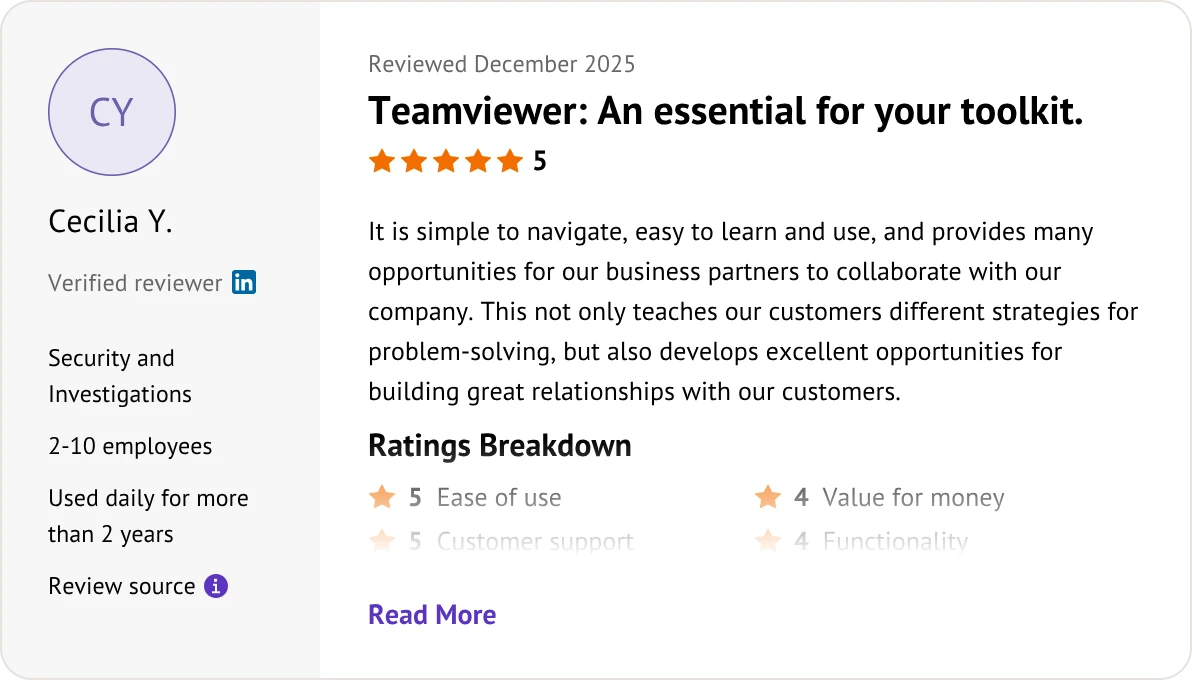
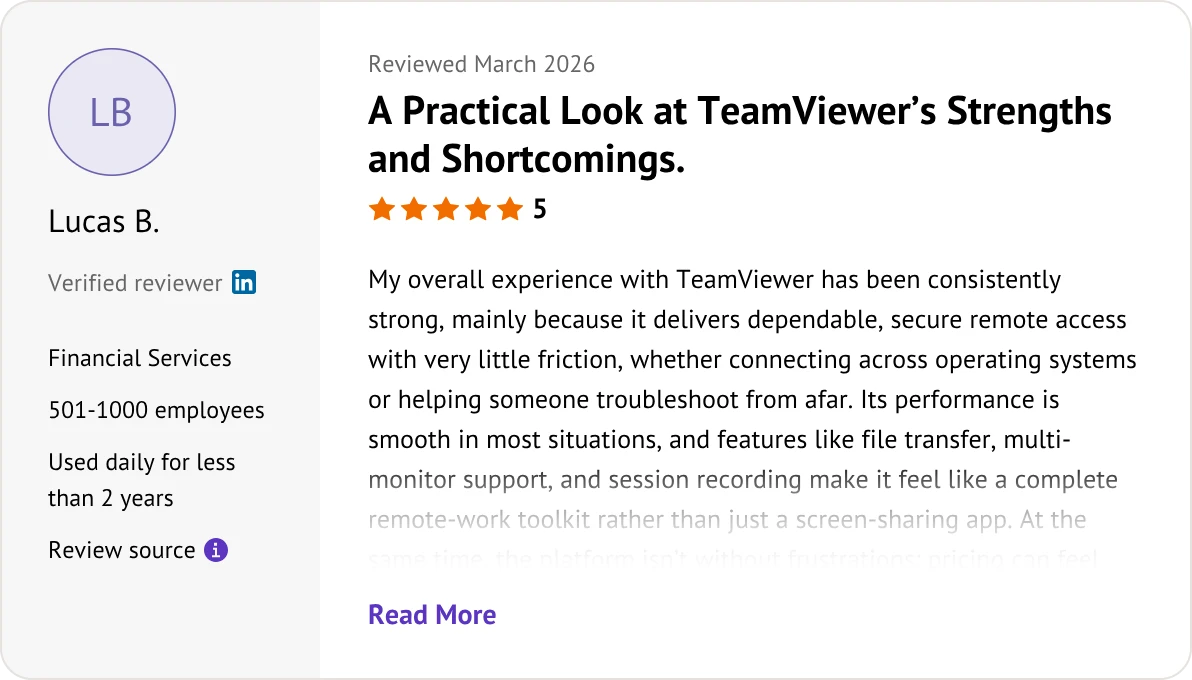
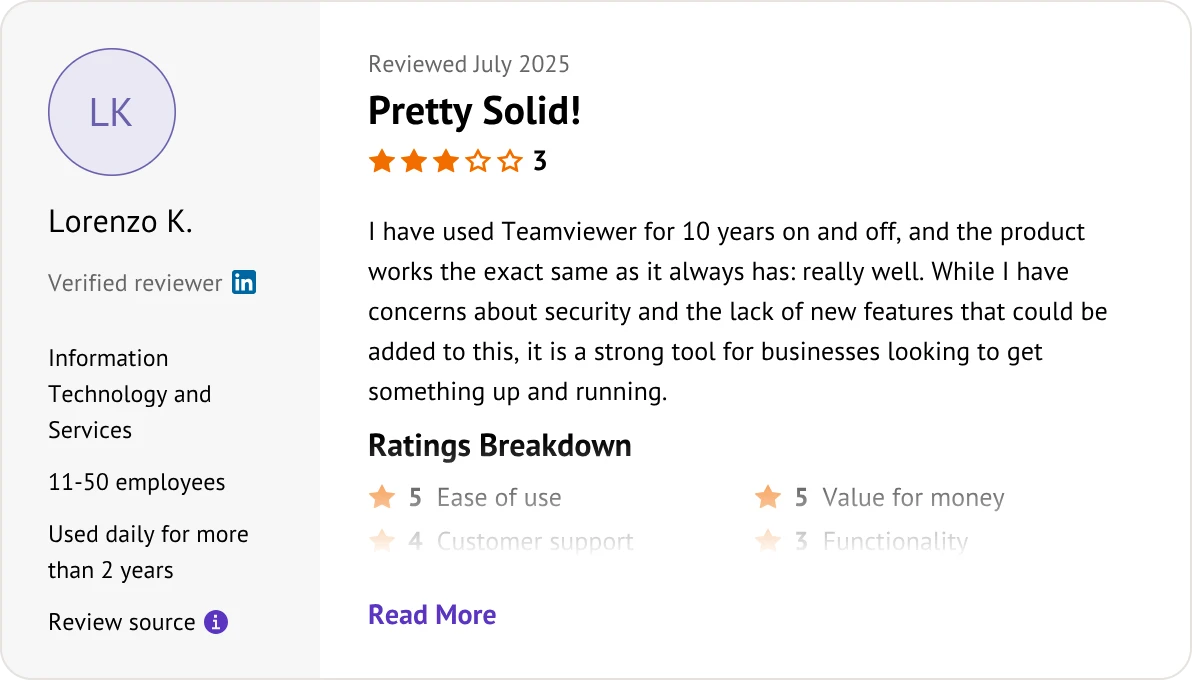
RemotePC user review

TeamViewer

TeamViewer user rating
TeamViewer user review

Frequently Asked Questions When Comparing RemotePC and TeamViewer

Is RemotePC or TeamViewer cheaper for business use?

RemotePC is significantly cheaper. RemotePC charges a flat annual fee (starting around $22–$30/year), whereas TeamViewer charges a monthly fee (starting around $20–$35/month). RemotePC’s entire year often costs less than a single month of TeamViewer.

Does RemotePC trigger false-positive "commercial use" blocks like TeamViewer?

No. RemotePC is predominantly a paid business service, so it does not use aggressive user-tracking blocks. TeamViewer’s free tier is notorious for suddenly locking users out with disruptive "commercial use suspected" popups.

Does RemotePC or TeamViewer offer a completely free personal version?

Only TeamViewer does. TeamViewer provides a long-term free version strictly for personal, non-commercial use. RemotePC does not have a permanent free tier and only offers a 7-day free trial (no credit card required).

How do the licensing and billing models of RemotePC vs TeamViewer differ?

RemotePC charges per controlled computer, while TeamViewer charges per technician. RemotePC allows an unlimited number of users or technicians to access a set number of devices. TeamViewer limits the number of licensed technicians or concurrent active sessions.

Is RemotePC or TeamViewer better optimized for remote gaming and high-motion video?

RemotePC performs better. RemotePC features a dedicated Performance Viewer that supports up to 60 FPS with low input lag. TeamViewer struggles with high-motion 3D graphics, often resulting in noticeable cursor delay and pixelation.

Can I remote control mobile devices from a PC using RemotePC vs TeamViewer?

TeamViewer wins easily. TeamViewer offers a powerful mobile support ecosystem allowing full remote control over thousands of phone models. RemotePC’s mobile capabilities are highly restricted and mostly view-only.

Is RemotePC or TeamViewer a better fit for large-scale enterprise IT deployment?

TeamViewer is far superior. It provides a comprehensive RMM (Remote Monitoring and Management) ecosystem, automated script execution, and advanced policy deployment. RemotePC lacks the infrastructure required to manage thousands of complex corporate endpoints.

Do both RemotePC and TeamViewer support clientless web browser access?

Yes, both do. RemotePC offers "Viewer Lite" through web portals, and TeamViewer allows technicians to launch full remote sessions directly from any modern web browser without installing local software.

Is RemotePC or TeamViewer more secure for corporate networks?

They are equally secure. Both platforms utilize industry-standard, bank-grade AES 256-bit encryption, two-factor authentication (2FA), and secure TLS cryptographic protocols.

Is RemotePC or TeamViewer better for managing Linux and headless servers?

TeamViewer. TeamViewer has a long history of deep native Linux integration and command-line support. RemotePC supports Linux but offers a much more basic and bare-bones feature set.

Does RemotePC or TeamViewer have more transparent contract and renewal terms?

RemotePC is much safer. TeamViewer is infamous for rigid auto-renewal clauses and requiring a strict 28-day written notice to cancel a subscription. RemotePC uses a straightforward, flat-rate annual model with no hidden terms.

Does RemotePC or TeamViewer integrate better with IT helpdesk platforms?

TeamViewer. TeamViewer offers out-of-the-box native integrations with major ITSM and CRM platforms like ServiceNow, Zendesk, and Jira. RemotePC has weak third-party platform support and relies mostly on basic APIs.

Which Is Better: TeamViewer or RemotePC?

Select the remote desktop tool that aligns best with your specific deployment needs and budget.

RemotePCChoose RemotePC for

  • Flat-rate annual plans that cost a fraction of TeamViewer.
  • Smoother performance for high-motion visual work.
  • Zero disruptive "commercial use" false blocks.
  • Transparent billing with simple online termination.

TeamViewerChoose TeamViewer for

  • Seamless management for thousands of corporate endpoints.
  • Complete remote command over iOS and Android fleets.
  • Industry-leading global data privacy certifications.
  • Native, out-of-the-box connections with ServiceNow and Zendesk.

Looking for a Budget-Friendly Alternative?

Ditch RemotePC and TeamViewer for AnyViewer’s high-performance, budget-friendly remote access.

AnyViewer

Choose AnyViewer for

  • Premium, elite-tier features without the legacy price markup.
  • High device limits perfectly tailored for business growth.
  • Advanced Elliptic Curve Cryptography (ECC) data protection.
  • Stutter-free, ultra-low latency remote control pipelines.
Try for Free
Try for Free

Choose the Right Remote Access Tool for Your Needs

Match your technical requirements and budget constraints with the right platform:

  • RemotePC offers an affordable annual plan with high-frame-rate streaming for smooth performance.
  • TeamViewer supports large corporate networks demanding extensive scalability and mobile device control.
  • AnyViewer provides a fast, highly secure alternative designed to drastically cut your software expenses.