
How to Exit Remote Desktop Without Connection Bar [4 Ways]
In full-screen RDP, the top connection bar is your exit. If it disappears due to glitches or settings, you can get "trapped." This guide shows you how to to exit Remote Desktop without the connection bar using shortcuts, Windows Security, or command-line tricks.

By Ellie / Updated on March 19, 2026


The Windows Remote Desktop Connection (RDC) tool is a staple for IT professionals and remote workers alike. Usually, a small blue connection bar hangs at the top of the screen, providing easy access to minimize, window, or close buttons.
But what happens when that bar vanishes? Whether it's a bug or a deliberate setting to maximize screen real estate, being stuck in a full-screen remote session can be frustrating. You might find yourself asking, "How do I exit Remote Desktop without the connection bar?" If you find yourself frantically hovering your mouse at the top of the screen with no luck, don't worry. There are several "backdoor" methods to exit Remote Desktop without bar access.
4 Ways to Exit Remote Desktop Without Connection Bar
Way 1. The Ultimate Shortcut: Ctrl + Alt + Break
The fastest and most reliable way to handle a missing connection bar is to force the Remote Desktop window out of full-screen mode. If you are wondering how to exit Remote Desktop without the connection bar in seconds, this is the gold standard.
How it works:
On most standard keyboards, pressing Ctrl + Alt + Break toggles the Remote Desktop client between full-screen and windowed mode.
Step 1. Press the keys simultaneously.
Step 2. The remote session will instantly shrink into a window on your local desktop.
Step 3. You can now use the standard "X" button in the top right corner of the window to close the session or simply minimize it.
Note for Laptop Users: Many modern laptops do not have a dedicated "Break" key. In these cases, you may need to use a combination like Ctrl + Alt + Fn + Pause or Ctrl + Alt + Shift.
Way 2. Using the Windows Security Shortcut (Ctrl + Alt + End)
When you are working locally, Ctrl + Alt + Delete brings up the security options (Task Manager, Sign out, Lock). However, if you press this while in an RDP session, your local computer will react, not the remote one.
To send this command to the remote computer, you must use: Ctrl + Alt + End
Steps to Exit:
Step 1. Press Ctrl + Alt + End while inside the RDP window.
Step 2. A menu will appear on the remote screen.
Step 3. Select Sign out to properly close your session and applications.
Step 4. Alternatively, select Task Manager, go to the Users tab, right-click your user, and select Disconnect.
Way 3. The Task Manager "Jump" (Local Machine Focus)
If the remote session is frozen and keyboard shortcuts aren't responding, you need to force your local machine to take back control. This is a practical fix for how to exit Remote Desktop without the connection bar when the software is unresponsive.
Step 1. Press Ctrl + Shift + Esc on your keyboard. This is the local shortcut for Task Manager.
Step 2. In many cases, the Task Manager will pop up underneath or over the RDP session, allowing your mouse to break the "focus" of the remote window.
Step 3. If you can see your local Taskbar now, right-click the Remote Desktop icon and select Close window.
Way 4. Using Command Line (CMD) or PowerShell
If you are a power user or if the GUI is completely unresponsive, you can kill the session using the command line from a second monitor or by "alt-tabbing" to a local CMD window.
Option A: Use Taskkill
On your local machine, open Command Prompt and type:"taskkill /IM mstsc.exe /F"
- /IM mstsc.exe: Targets the Remote Desktop executable.
- /F: Forcefully terminates the process.
Option B: Use the TSDiscon command
If you want to disconnect gracefully (leaving your programs running on the remote side):
Step 1. Open the "Run" dialog inside the remote session (Press Win + R).
Step 2. Type "tsdiscon" and hit Enter.
Step 3. The session will disconnect immediately.
Bonus Tip: A More User-Friendly Alternative – AnyViewer
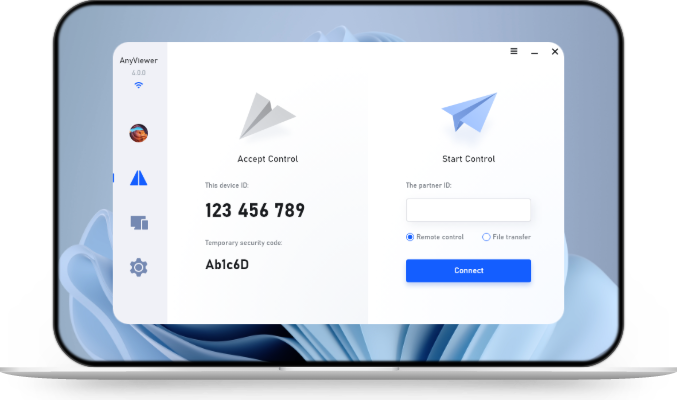
If you frequently encounter issues with the Windows Remote Desktop connection bar or find RDP's full-screen constraints frustrating, using a professional third-party tool like AnyViewer can provide a much smoother experience.
AnyViewer is a free, fast, and secure remote desktop software designed to overcome many of the common technical hurdles found in traditional RDP.
Why Choose AnyViewer Over RDP?
- Flexible Control Bar: Unlike the sometimes "finicky" Windows RDP connection bar, AnyViewer features a highly responsive and intuitive top toolbar. It allows you to switch between windowed and full-screen modes, change resolutions, and even chat with the remote user, all with a single click.
- No Complex Setup: RDP often requires Port Forwarding or VPNs for over-the-internet access. AnyViewer works across different networks automatically, so you won’t get "trapped" in a session due to network-related freezes.
- One-Click Shortcuts: AnyViewer includes a built-in "Operation" menu that provides quick access to essential commands like Ctrl+Alt+Del, Task Manager, and Lock, saving you from memorizing complex keyboard combinations when the UI isn't responding.
- High Performance: It provides a stable, high-frame-rate connection that is ideal for technical support, file transfer, or remote PC management, ensuring that your workflow remains uninterrupted by display glitches.
For users who want a reliable remote access experience without worrying about missing navigation bars or complicated configuration settings, AnyViewer offers a streamlined, "install-and-go" solution.
Conclusion
Getting "trapped" in a Remote Desktop session without a connection bar is a common hiccup, but it’s easily solved with the right keyboard shortcuts. Ctrl + Alt + Break remains the gold standard for quick exits, while Ctrl + Alt + End is the best way to sign out securely. By understanding these methods, you can always exit Remote Desktop without bar issues and maintain full control over your workstation.



 as a preferred
source on Google
as a preferred
source on Google