
10 Best Advantages of Remote Learning for Students in 2026
This guide breaks down 10 essential advantages of remote learning, including practical tips, a comparison of the advantages and disadvantages of remote learning, and provides practical tips, including using AnyViewer for remote lab access.

By Ellie / Updated on May 8, 2026


Education is no longer confined to four walls and a chalkboard. Whether you are a professional looking to upskill or a student seeking flexibility, the advantages of remote learning have transformed how we acquire knowledge. The shift toward digital classrooms isn't just a temporary trend; it is a fundamental change in accessibility and efficiency.
What are the Advantages of Remote Learning?
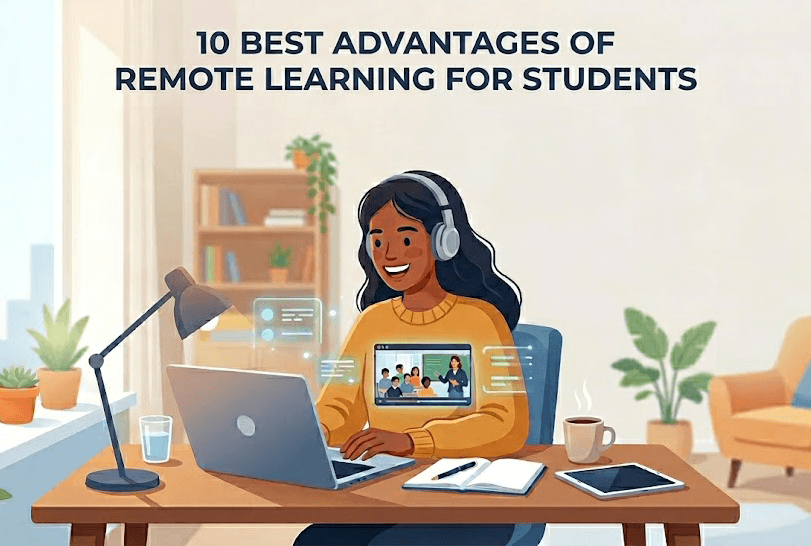
Remote learning refers to an educational setup where the instructor and the student are separated by distance and time, connected primarily through technology. Unlike traditional classrooms, it leverages video conferencing, Learning Management Systems (LMS), and cloud-based collaboration tools to deliver content.
For many, the primary draw is the elimination of geographical barriers. However, the scope of remote education goes far beyond just "watching videos." It involves interactive synchronization, self-paced modules, and a global network of peers that physical campuses often struggle to replicate.
10 Critical Advantages of Remote Learning for Students
To understand the full impact of this shift, we must look at the specific advantages of remote learning for students through the lens of productivity, finance, and career growth.
1. Unmatched Schedule Flexibility
The most cited benefit is the ability to create a "custom clock." In a traditional setting, if you have a doctor's appointment or a family emergency during a 10:00 AM lecture, that knowledge is lost. Remote learning allows you to shift your "school hours" to the evening or early morning, ensuring that your education fits into your life, rather than forcing your life to revolve around a rigid institutional calendar.
2. Location Independence and Global Mobility
Remote learning removes the "zip code tax" on education. You can live in a cost-effective rural area while attending a prestigious program based in London or New York. This independence also benefits "digital nomads" who wish to travel while maintaining their academic progress. As long as you have a stable internet connection, the world is your campus.
3. Massive Reduction in Total Cost of Ownership
Education is expensive, but the tuition is often only half the battle. By learning remotely, students eliminate:
- Commuting Costs: Savings on gas, car maintenance, and public transit.
- Housing Premiums: No need to pay inflated rent in "college towns."
- Physical Materials: Most resources are delivered via PDF or interactive web modules, saving hundreds of dollars per semester on heavy textbooks.
4. Personalized Learning Pacing
Every brain processes information differently. In a live classroom, the professor moves at a median speed. Remote learning empowers students to:
- Pause and Rewind: Spend more time on difficult calculus formulas.
- Fast-Forward: Move quickly through introductory material they already know.
This "Goldilocks" pacing (not too fast, not too slow) significantly reduces student burnout and frustration.
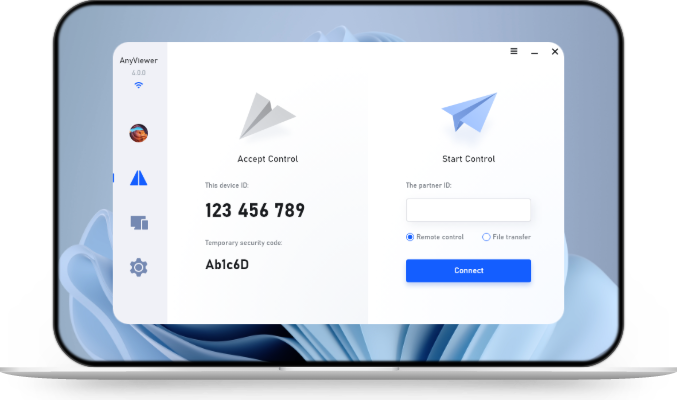
5. Seamless Access to High-End Resources via AnyViewer
One common hurdle in remote learning is the "hardware gap." Certain engineering, design, or data science courses require high-performance computers that students may not own.
This is where AnyViewer becomes an essential companion. By using AnyViewer, students can remotely access powerful lab workstations from a basic laptop. This ensures that you can run resource-heavy software like AutoCAD, Creative Cloud, or complex simulations from anywhere, effectively turning a $300 Chromebook into a high-end workstation.
6. Development of Professional Digital Literacy
The modern workforce is increasingly remote or hybrid. By navigating online portals, managing digital submissions, and collaborating via Slack or Zoom, students are inadvertently undergoing a "job prep" program. You aren't just learning history or coding; you are mastering the digital communication tools that 21st-century employers demand.
7. A Comfortable, Optimized Learning Environment
Traditional lecture halls are often cramped, poorly lit, or uncomfortably cold. Remote learning allows you to curate your environment. Whether it’s an ergonomic chair, a standing desk, or specific lighting that helps you focus, a customized "Deep Work" station leads to higher concentration levels and better physical health over long study sessions.
8. Increased Inclusivity and Accessibility
Remote learning is a powerful equalizer. For students with physical disabilities, the "commute" to a campus can be a significant barrier. Furthermore, for those with social anxiety or neurodivergent traits, the ability to engage in discussions via text-based forums rather than high-pressure public speaking allows their intellectual contributions to shine without the weight of social stress.
9. Broadened Networking and Diversity
Ironically, you often meet more diverse people in a digital classroom than in a physical one. You might be working on a group project with a peer in Tokyo, a professional in Berlin, and a stay-at-home parent in Seattle. This provides a global perspective that is rarely found in a localized, physical classroom, preparing you for a globalized economy.
10. Environmental Sustainability
Remote learning is the "greenest" way to study. By removing millions of cars from the road and reducing the energy required to heat, cool, and light massive campus buildings, digital education significantly lowers the carbon footprint of the academic sector. It is an investment in both your future and the planet’s.
Advantages and Disadvantages of Remote Learning: A Balanced View
While the perks are numerous, a realistic SEO guide must address the advantages and disadvantages of remote learning to help you make an informed decision.
| Feature | Advantage | Disadvantage |
| Schedule | Total flexibility to learn anytime. | Requires high self-discipline. |
| Social | Access to global networking. | Lack of face-to-face "water cooler" talk. |
| Technology | Access to cutting-edge digital tools. | Potential for technical glitches. |
| Environment | Comfortable, personalized setup. | Potential for home-based distractions. |
Step-by-Step: How to Succeed in a Remote Learning Environment
Transitioning to a virtual classroom requires more than just a laptop; it demands a strategic approach to managing your time and tools effectively. Follow these actionable steps to optimize your digital workspace and academic performance:
- Audit Your Tech: Ensure your microphone and webcam work. Install AnyViewer if you need to bridge the gap between your home setup and a more powerful remote computer.
- Set "Office Hours": Just because you can learn anytime doesn't mean you shouldn't have a routine. Block out 9:00 AM to 11:00 AM daily for your hardest tasks.
- Engage in the "Digital Third Space": Don't just watch the videos. Participate in the Discord or Slack channels. Networking is 50% of the value of education.
- Practice Digital Hygiene: Turn off social media notifications on your study device to maintain "flow state."
The Verdict
The advantages of remote learning outweigh the challenges for most modern learners. By reclaiming your time, reducing your expenses, and utilizing tools like AnyViewer to stay connected to your resources, you can customize an educational experience that fits your life, not the other way around.
The future of education is decentralized. The question is no longer whether you should learn remotely, but how you will use these tools to stay ahead.


 as a preferred
source on Google
as a preferred
source on Google