
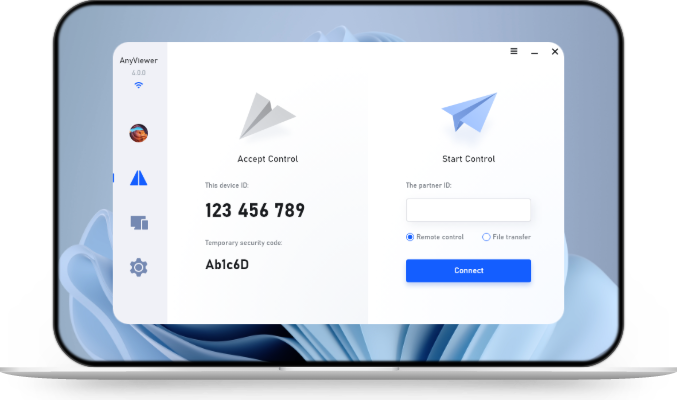
8 Best LonelyScreen Alternatives & Migration Guide
Need to replace LonelyScreen? Compare eight practical options by network requirements, platform, control, recording, and cost. Then use the migration checklist to move your iPhone screen-mirroring workflow with less trial and error.

By Ricardo / Updated on September 3, 2026


LonelyScreen turns a Windows PC or Mac into an AirPlay receiver, but that simple setup is not the right fit for every workflow. You may need cross-network access, Android support, recording, USB reliability, or a product with a usable free tier. The eight choices below solve different versions of that problem.
Quick answer: Choose AnyViewer for screen viewing across different networks and remote-support work; Reflector or X-Mirage for a familiar AirPlay-receiver workflow; LetsView for straightforward same-Wi-Fi casting; or AnyMirror when a wired USB path matters.
Before replacing LonelyScreen: match the tool to the job
Start with the connection you actually need. An AirPlay receiver is convenient in a classroom or meeting room where both devices share one trusted network. It is less useful for remote support, restrictive corporate Wi-Fi, or travel. Also separate screen viewing from device control: iOS allows screen broadcasting, but generally does not let third-party apps provide unrestricted remote touch control.
- Same room, same Wi-Fi: prioritize AirPlay discovery, low setup effort, and audio support.
- Different networks: choose an authenticated remote-viewing tool rather than relying on local AirPlay discovery.
- Recording or streaming: confirm system-audio capture, watermark rules, resolution, and recording limits before paying.
- Unreliable Wi-Fi: keep a USB-capable option on the shortlist.
- Business use: check commercial-use terms, device limits, encryption, account controls, and support.
8 best LonelyScreen alternatives compared
| Alternative | Best for | Connection | Key trade-off |
|---|---|---|---|
| AnyViewer | Cross-network viewing and remote support | Internet or local network | iPhone screen can be viewed, not freely controlled |
| TeamViewer QuickSupport | Attended support sessions | Internet | Commercial use requires the appropriate license |
| Reflector | AirPlay receiver on Windows or Mac | Same local network | Paid after its trial |
| X-Mirage | AirPlay mirroring with recording | Same local network | Trial rather than a permanent free plan |
| LetsView | Basic wireless casting | Usually same Wi-Fi | Free-tier limits and ads may apply |
| ApowerMirror | Wireless and USB flexibility | Wi-Fi or USB | Free use may include limits or a watermark |
| AnyMirror | USB-based demos and content capture | USB or Wi-Fi, depending on mode | Free use is limited |
| AirDroid Cast | Joining by QR or cast code | WLAN, AirPlay, USB, or remote mode | Some connection modes and features require a paid plan |
Plans and feature limits change. Treat the table as a workflow guide and verify the current license and OS requirements on the vendor's download page before deployment.
1. AnyViewer: best for viewing across different networks
AnyViewer is the strongest fit when the iPhone and receiving computer may not share a LAN. After authentication, a computer can request the iPhone screen over the internet; the iPhone user approves the request and starts an iOS broadcast. It also covers broader remote-access tasks, so support teams do not need a separate tool for every device type.
- Pros: Works across different networks; supports Windows, macOS, iOS, and Android; combines mobile screen viewing with remote desktop, file transfer, chat, screenshots, and session recording; the same-account device list reduces repeated connection setup.
- Cons: The iPhone user must approve the request and start Apple's screen broadcast; iOS can be viewed but not freely controlled; account-based setup is less direct than selecting a local AirPlay receiver for a one-off meeting.
2. TeamViewer QuickSupport: best for attended support
TeamViewer QuickSupport is built around a support session: the iPhone user shares an ID, approves the connection, and starts screen broadcasting. It is useful when a technician needs to watch a problem happen in real time. It is not a drop-in tool for unattended iPhone control, and business users should confirm licensing before rollout.
- Pros: Familiar to many support teams; works over the internet instead of depending on local AirPlay discovery; session IDs are convenient when the phone and technician use different accounts; well suited to attended troubleshooting.
- Cons: The iPhone user must remain involved to approve screen sharing; technicians can guide the user but cannot operate iOS freely; the workflow is heavier than AirPlay for casual casting; commercial use requires the appropriate license.
3. Reflector: closest to a traditional AirPlay receiver
Reflector keeps the workflow closest to LonelyScreen. Run Reflector on the Windows PC or Mac, place both devices on the same network, open Control Center on the iPhone, tap Screen Mirroring, and select the receiver. It is a sensible choice for classrooms, meeting rooms, and local presentations where AirPlay discovery already works.
- Pros: Keeps the native iPhone Control Center workflow; does not require an iOS companion app for standard AirPlay mirroring; supports Windows and Mac receivers; useful for classrooms and rooms where several presenters take turns.
- Cons: Normally depends on both devices being discoverable on the same local network; guest, hotel, or corporate Wi-Fi may block discovery; it is a receiver and presentation tool rather than a remote-support platform; continued use is paid after the trial.
4. X-Mirage: AirPlay mirroring with recording
X-Mirage also turns a Windows PC or Mac into an AirPlay receiver and adds recording-oriented controls. It suits demonstrations or training sessions that need a saved copy. Test audio capture and resolution with your actual presentation before committing, and account for the fact that continued use is paid after the trial.
- Pros: Uses the familiar AirPlay menu on iPhone; includes screen and audio recording features; can receive more than one iOS screen for comparison or instruction; works on both Windows and Mac.
- Cons: Local-network discovery can fail on isolated Wi-Fi; it does not solve cross-network support; recording quality and audio routing should be tested with the target PC; there is no permanent free plan.
5. LetsView: simple same-Wi-Fi casting
LetsView is aimed at quick wireless casting. Install it on the iPhone and computer, connect both devices to the same Wi-Fi, select the receiving PC in the app, and start the iOS broadcast. It is easy to try, although free-tier advertising, session limits, or feature restrictions may affect frequent use.
- Pros: Quick to test for basic casting; supports iOS and Android sources; pairing options are easier to explain to occasional users than network troubleshooting; useful for informal presentations and viewing photos or video on a larger display.
- Cons: Best results generally depend on the same Wi-Fi network; the free tier may include ads or feature and duration limits; it is not designed for unrestricted iPhone control; wireless performance varies with network congestion.
6. ApowerMirror: useful when you want Wi-Fi and USB
ApowerMirror supports both wireless and wired workflows, which makes it easier to recover when network discovery is unreliable. For Wi-Fi use, pair the devices in the app and select Mirror Phone to PC; for a wired workflow, follow the product's iOS USB prompts. Check the current free-tier watermark and time limits if the output will appear in a recording.
- Pros: Offers both Wi-Fi and USB connection paths; supports iPhone and Android mirroring; includes recording, screenshots, and presentation-oriented tools; USB provides a fallback when wireless casting is unstable.
- Cons: The free tier may add a watermark or usage limits; initial USB setup can require drivers, trust prompts, or permissions; available control features differ between Android and iOS; the broader interface may be unnecessary for users who only want an AirPlay receiver.
7. AnyMirror: useful for USB-first demonstrations
AnyMirror can mirror an iPhone and bring camera, microphone, or local content into a computer-based presentation workflow. A USB connection is helpful at events where venue Wi-Fi is congested. Its free mode is better for evaluation than long daily sessions, so test duration, quality, and watermark restrictions first.
- Pros: USB operation avoids dependence on venue Wi-Fi; can bring the phone screen, camera, microphone, and files into content-production workflows; helpful for app demos, lessons, and live-stream preparation.
- Cons: The free mode has quality, duration, source, or watermark restrictions depending on the current version; cable use reduces mobility; it is oriented more toward capture and presentation than remote support; iPhone control remains limited by iOS.
8. AirDroid Cast: flexible joining by code or QR
AirDroid Cast supports several joining methods, including WLAN, AirPlay, USB, QR code, and cast code. That flexibility helps when guests need to share a phone without learning an AirPlay receiver name. Remote modes and advanced features can depend on the plan, so map the chosen connection method to the license you intend to use.
- Pros: Provides several connection methods instead of relying on one discovery protocol; QR and cast codes are practical for guest presenters; supports iOS and Android; USB is available when wireless conditions are poor.
- Cons: Remote casting and advanced options may require a paid plan; the number of modes can make first-time setup less obvious; permissions and capabilities vary by platform; iOS broadcasting still requires user confirmation and does not provide unrestricted remote control.
How to migrate from LonelyScreen to AnyViewer
This migration changes the connection model from local AirPlay discovery to an authenticated screen-viewing session. Install the replacement alongside LonelyScreen first; remove the old receiver only after the new path passes a real-world test.
Step 1. Record the old workflow
Write down the source iPhone or iPad, receiving computer, network, audio route, preferred orientation, resolution, and whether you record sessions. Take a screenshot of any LonelyScreen settings you may need to reproduce. This short inventory prevents an overlooked audio or recording requirement from surfacing during the first live session.
Step 2. Install and sign in on both devices
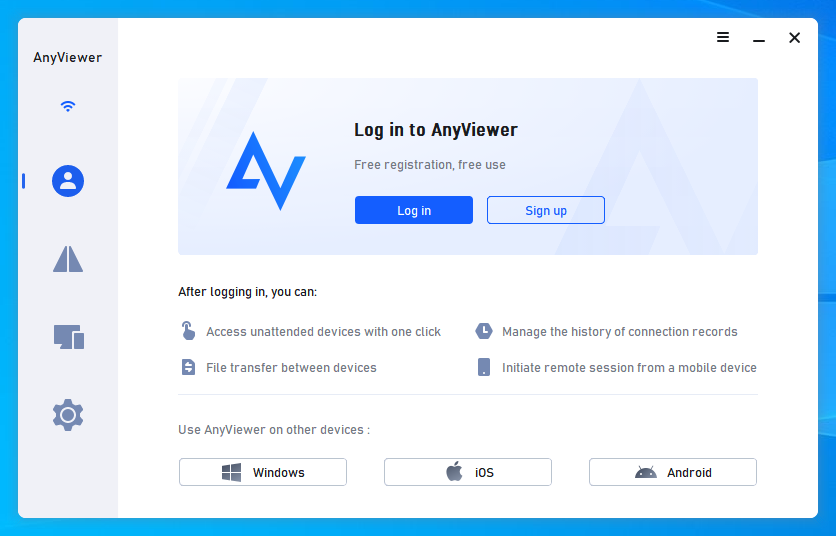
Install AnyViewer on the receiving computer and the iPhone. Create an account if needed, then sign in on both devices. Using the same account makes the phone easier to find under My devices; a Device ID can be used for a request between different accounts.
Step 3. Request the iPhone screen
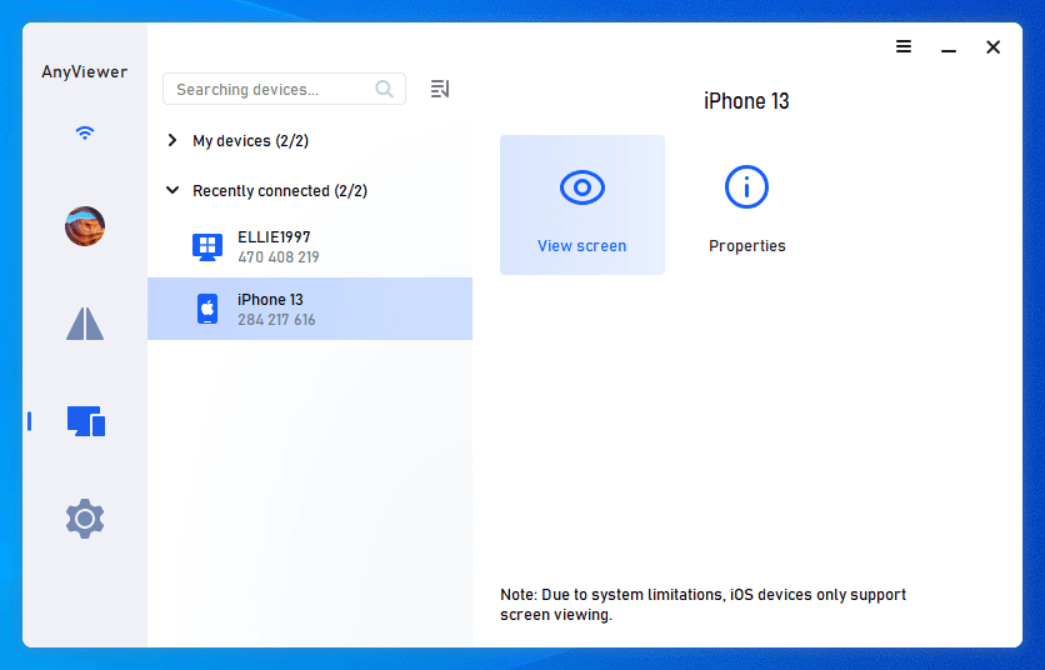
On the computer, open Device > My devices, select the iPhone, and choose View Screen. If the devices use different accounts, enter the iPhone's Device ID and send a viewing request instead.
Step 4. Approve and start the broadcast
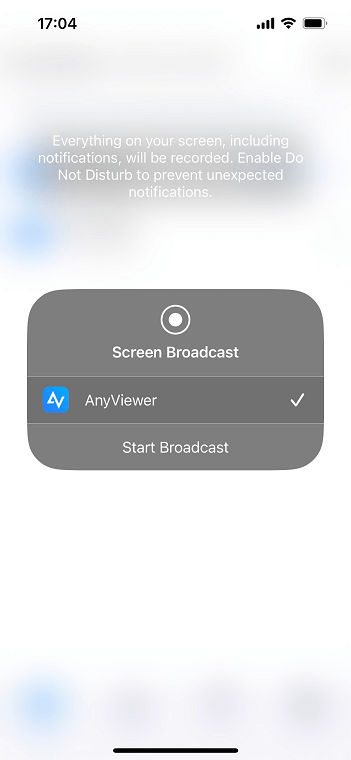
On the iPhone, tap Allow, confirm the screen-broadcast prompt, and tap Start Broadcast. A short countdown appears before the screen becomes visible on the computer. Turn on Do Not Disturb first if notifications must stay private.
Step 5. Validate the replacement
Run a five-minute rehearsal. Rotate the phone, play motion-heavy content, check the selected image-quality mode, verify audio separately, and make a short test recording if that is part of the workflow. Also test on the network that will be used in production rather than relying only on office Wi-Fi.
Step 6. Retire LonelyScreen safely
Keep LonelyScreen available for one fallback session. Once AnyViewer has passed the test, remove LonelyScreen from startup, uninstall it through the operating system, and delete obsolete firewall exceptions or saved shortcuts. Do not delete old recordings until they have been backed up and opened successfully.
Rollback plan: If the new session fails, end the iOS broadcast, reconnect both devices to the same trusted Wi-Fi, reopen LonelyScreen, and use AirPlay while you check account access, firewall rules, and app permissions.
Troubleshooting after the switch
- The iPhone is not listed: confirm both apps are current, check that the intended account is signed in, or connect with the Device ID.
- The request arrives, but the screen stays black: end the session, start it again, and complete the iOS Start Broadcast prompt.
- Video is choppy: switch from high quality to balanced or high speed, close competing uploads, and test a wired or stronger network.
- Notifications are visible: enable Do Not Disturb or a Focus mode before broadcasting.
- There is no audio: verify whether the chosen product and mode carry system audio, then check Windows output, iPhone silent mode, and recording permissions.
FAQ about LonelyScreen alternatives
What is the best free LonelyScreen alternative?
There is no single best choice for every setup. AnyViewer fits cross-network viewing and support; LetsView is convenient for basic same-Wi-Fi casting; TeamViewer QuickSupport fits attended support. Compare current free-tier limits before deployment.
Can I mirror an iPhone to a Windows PC without AirPlay?
Yes. Account-, QR-code-, USB-, and cast-code-based products can carry the screen without turning the PC into a traditional AirPlay receiver.
Can a LonelyScreen alternative control an iPhone from a PC?
Usually not in the way a remote desktop controls a computer. Most tools can display the iPhone screen, but iOS restricts third-party apps from providing unrestricted remote touch control.
Do the iPhone and PC have to use the same Wi-Fi?
AirPlay receiver apps generally rely on the same local network. Remote-access tools such as AnyViewer can work across different networks after the devices authenticate and the iPhone user approves screen sharing.
How can I switch without disrupting a presentation?
Run both apps during the transition, rehearse with the actual network and display, keep LonelyScreen for one fallback session, and uninstall it only after the replacement passes the checklist.
Why is there no sound after switching?
Video and system audio may use different permissions or routes. Confirm that the selected product and connection mode support iOS system audio, then inspect the computer's output device, iPhone silent mode, and recording permissions.
Final recommendation
For a near-identical local AirPlay workflow, start with Reflector or X-Mirage. For simple same-network casting, try LetsView. If the real reason for leaving LonelyScreen is the same-Wi-Fi requirement or the need to support phones remotely, AnyViewer is the more practical migration because it uses an authenticated session and can connect across networks.
Download AnyViewer, test it alongside LonelyScreen, and use the migration checklist above before removing the old app.



 as a preferred
source on Google
as a preferred
source on Google